Community gardens are vibrant, productive spaces — but they come with a unique challenge that most home gardeners never face: dozens of different people, growing dozens of different crops, in a shared patch of earth. Over time, this intensive use can strip the soil of essential minerals, creating imbalances that quietly undermine your harvests. Understanding mineral balancing isn't just for farmers with expensive equipment — it's a practical skill that any community gardener can learn and apply.
What Is Mineral Balancing?
Mineral balancing — sometimes called soil remineralization — is the practice of identifying which minerals are deficient or excessive in your soil and then correcting those levels to create an optimal growing environment. It goes beyond simply adding fertilizer. It's about understanding the relationships between minerals and how they interact with each other, with soil biology, and with the plants you're trying to grow.
The concept was popularized in part by agronomists like William Albrecht, who argued that the mineral content of soil directly determines the nutritional quality of food grown in it. Whether you're growing tomatoes, kale, or herbs, the plants can only be as healthy as the soil they live in. And healthy soil isn't just about nitrogen, phosphorus, and potassium — the classic trio of commercial fertilizers. It involves a much broader cast of characters, including calcium, magnesium, sulfur, and a range of trace minerals like boron, zinc, manganese, and iron.
Why Community Garden Soils Are Uniquely Vulnerable
Unlike a backyard garden tended by one household, a community garden plot is worked intensively across multiple growing seasons by many different gardeners. This creates specific challenges:
Heavy cropping pressure. When the same beds produce vegetables season after season without thoughtful rotation or replenishment, certain minerals get depleted faster than they can be naturally replaced.
Inconsistent amendment practices. One gardener might add wood ash (high in potassium), another adds bags of compost, and yet another adds nothing at all. Without coordination, these individual efforts can create patchwork soil conditions that are difficult to manage.
Water and leaching. Communal plots often receive inconsistent watering — sometimes too much. Excessive irrigation leaches water-soluble minerals like calcium and magnesium out of the root zone and deep into the soil profile where plants can't access them.
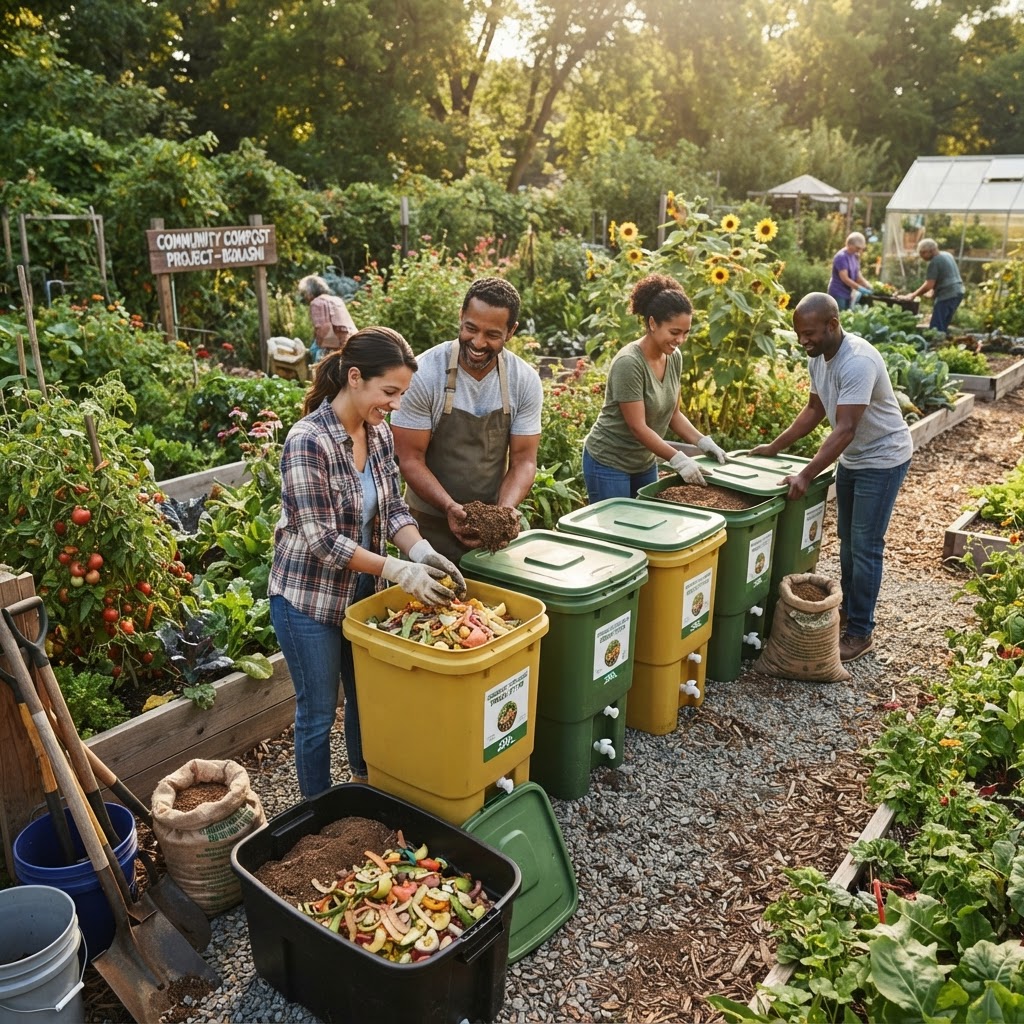
Variable organic matter. Shared compost bins can be a wonderful resource, but the quality and mineral content of compost varies depending on what goes into it. A compost pile fed mostly with carbon-heavy materials like cardboard and straw will produce very different results than one rich in kitchen scraps and green clippings.
The Key Minerals and What They Do
Before you can balance anything, you need to know the players. Here's a practical overview of the most important minerals in community garden soils:
Macronutrients
Calcium (Ca) is often called the "king of nutrients" because it plays a structural role in plant cell walls and helps regulate the uptake of other nutrients. Calcium deficiencies show up as blossom end rot in tomatoes, tip burn in lettuce, and stunted root development. Calcium also strongly influences soil structure — soils with good calcium levels tend to be crumbly and well-draining.
Magnesium (Mg) sits at the center of every chlorophyll molecule, making it essential for photosynthesis. Deficiency shows up as yellowing between the leaf veins (interveinal chlorosis), especially in older leaves. Magnesium and calcium compete for uptake, so too much of one can block the other.
Sulfur (S) is important for protein synthesis and gives vegetables like brassicas and onions their characteristic flavors. Sulfur deficiency is less common but can appear in heavily leached or sandy soils.
Secondary and Trace Minerals
Potassium (K) regulates water use in plants, strengthens cell walls, and helps with fruit development. It's often abundant in garden soils but can become excessive if wood ash or kelp meal is applied heavily year after year.
Boron (B) is needed in tiny amounts but is critical for cell division, pollination, and sugar transport. Deficiencies cause hollow stems in brassicas and poor fruit set.
Zinc (Zn) supports enzyme function and helps plants deal with stress. Deficiencies are more common in alkaline soils and appear as stunted new growth.
Iron (Fe) and Manganese (Mn) are often sufficiently present in soils but become unavailable when pH is too high. Many apparent deficiencies in these minerals are actually pH problems in disguise.
How to Test Your Soil
You cannot balance what you haven't measured. Soil testing is the foundation of any mineral balancing program, and it's more accessible than many gardeners realize.
Basic NPK tests are available as inexpensive kits from garden centers. They give you a rough picture of nitrogen, phosphorus, and potassium levels. These are a good starting point but won't tell you about calcium, magnesium, or trace minerals.
Mail-in laboratory tests are the gold standard. For a modest fee, you can send a soil sample to an agricultural laboratory and receive a detailed report covering pH, organic matter, major minerals, and often a full suite of trace elements. Many labs also provide amendment recommendations. Look for university extension services in your region, as they often offer affordable testing.
Interpreting base saturation. More advanced soil tests will show you the "base saturation" — the percentage of your soil's exchange sites occupied by calcium, magnesium, potassium, and sodium. Ideally, calcium occupies roughly 60–70% of those sites, magnesium around 10–20%, and potassium around 2–5%. These ratios guide your amendment decisions more precisely than raw numbers alone.
Getting Started
If mineral balancing feels overwhelming, here's a simple, practical path forward for your community garden:
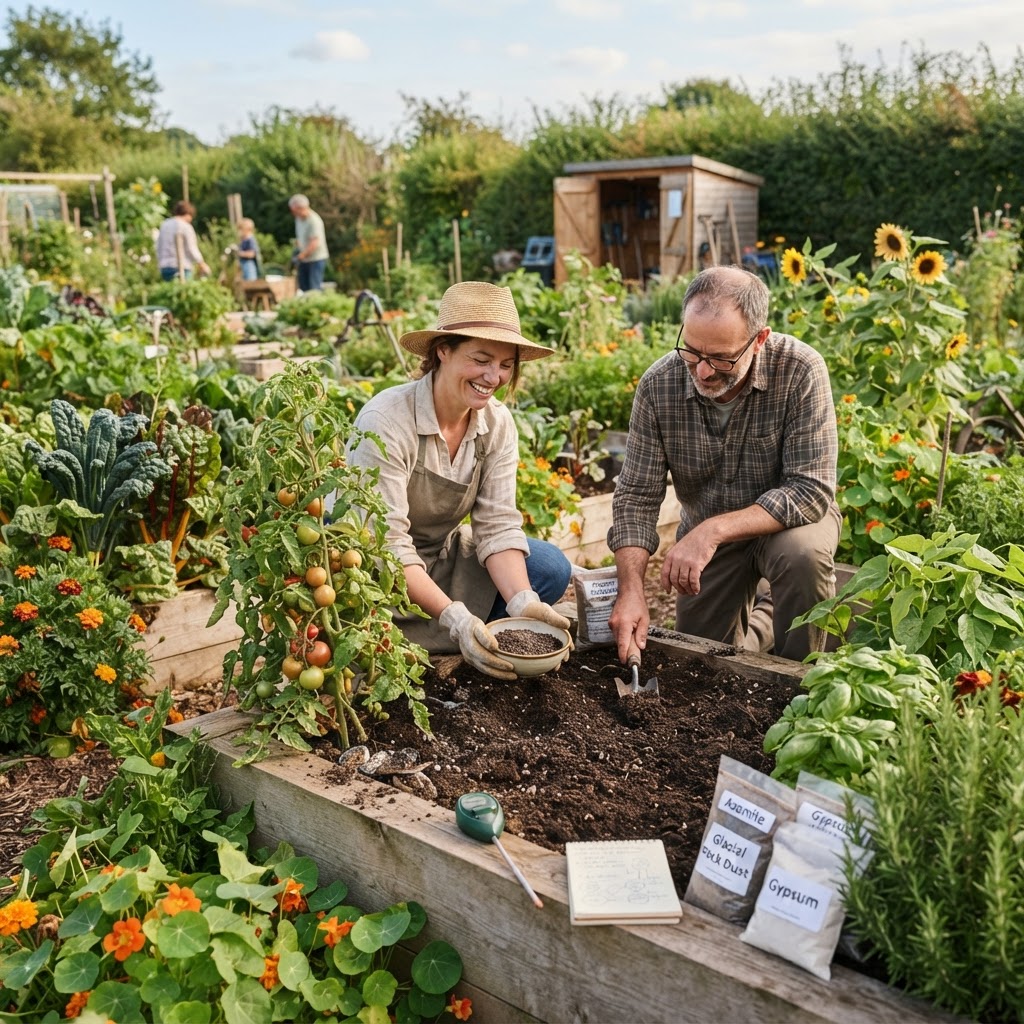
Step 1: Collect a representative soil sample. Take small scoops of soil from at least five or six spots across your plot, mix them together in a clean bucket, and send that composite sample to a lab. Collect soil from the top six to eight inches — the primary root zone.
Step 2: Test at the right time. Fall is ideal because you have time to add slow-release amendments before the spring growing season. Spring testing is fine too, but give amendments time to incorporate before planting.
Step 3: Start with pH. Before worrying about individual minerals, check your pH. Most vegetables grow best in a pH range of 6.0 to 7.0. Many mineral imbalances are actually pH problems — a soil with a pH of 7.8 will lock out iron and manganese regardless of how much is present in the soil.
Step 4: Address the big three first. Focus initially on calcium, magnesium, and pH. These have the largest influence on overall soil health and nutrient availability. Once these are in balance, many trace mineral issues resolve on their own.
Step 5: Bring the whole community on board. Share your test results at a community meeting. Mineral balancing works best when everyone in the garden adopts consistent practices. If one person is dumping wood ash while another is adding sulfur, you're working against each other.
Interpreting Your Results and Creating a Plan
When your soil test comes back, don't be intimidated by the numbers. Focus on:
- pH: If below 6.0, the soil is too acidic. Add agricultural lime (calcium carbonate) to raise it. If above 7.5, the soil is too alkaline. Sulfur or acidic organic matter can help lower it.
- Calcium levels: Low calcium in acidic soils can be corrected with lime. In neutral or alkaline soils, gypsum (calcium sulfate) adds calcium without raising pH.
- Magnesium levels: If low relative to calcium, dolomite lime (which contains both calcium and magnesium) or Epsom salt can help. Be cautious — too much magnesium tightens soil structure and can cause drainage problems.
- Potassium: Often excessive in community gardens due to overuse of compost and wood ash. High potassium blocks calcium and magnesium uptake, so it's worth monitoring.
Create a simple amendment schedule. Apply soil amendments in fall, till or incorporate lightly, and retest the following year. Mineral balancing is a multi-year process, not a one-time fix.
Natural Amendments for Mineral Balancing
Many effective mineral amendments come from natural sources and fit well within organic growing systems:
- Agricultural lime raises pH and adds calcium
- Gypsum adds calcium and sulfur without affecting pH
- Dolomite lime adds calcium and magnesium together
- Greensand is a slow-release source of potassium, iron, and trace minerals
- Kelp meal provides a broad spectrum of trace minerals, including iodine and boron
- Rock phosphate slowly releases phosphorus and trace minerals
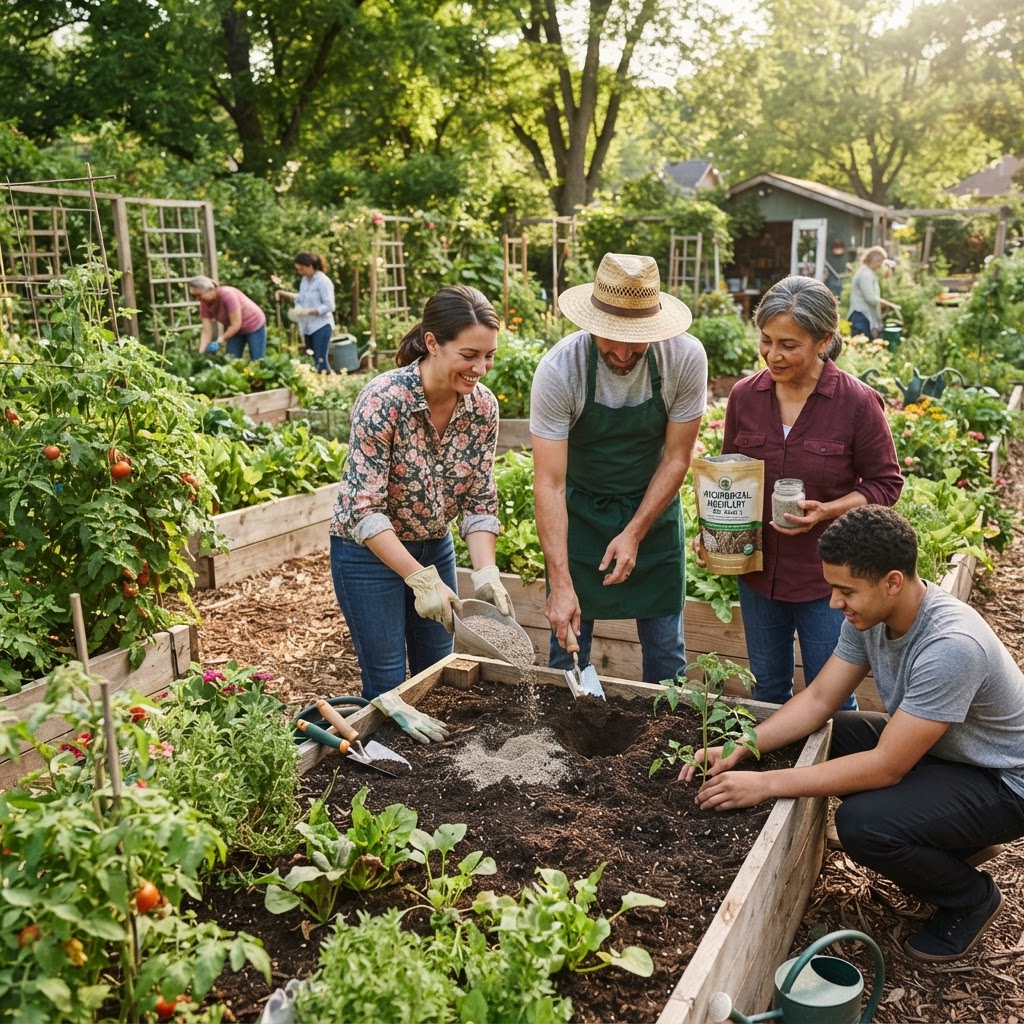
- Azomite is a volcanic mineral deposit commonly used to remineralize soils with trace elements
- Wood ash adds potassium and lime — use sparingly, as it raises pH quickly
- Compost improves overall mineral availability by supporting soil biology, though it's not a concentrated mineral source
Common Mistakes to Avoid
Over-relying on NPK fertilizers alone
Commercial fertilizers solve nitrogen, phosphorus, and potassium needs but completely ignore the broader mineral picture. A plot that gets bagged fertilizer every year but no calcium, trace minerals, or organic matter will eventually become difficult to grow in, regardless of how much fertilizer you add.
Skipping the soil test
Guessing at mineral deficiencies based on plant symptoms is unreliable. Many deficiencies look similar, and adding the wrong amendment can make things worse. Always test before you amend.
Adding too much of a good thing
More is not better with mineral amendments. Adding excessive lime, for example, will raise pH too high and lock out the very nutrients you're trying to make available. Follow lab recommendations or start with conservative rates.
Ignoring the relationship between minerals
Calcium and magnesium compete. Potassium and calcium compete. Iron and manganese interact. When you correct one mineral without considering the others, you can inadvertently create a new imbalance. Think of soil minerals as a team — you want everyone in the right proportion, not just one star player.
Failing to coordinate with other plot holders
In a communal space, individual amendment choices affect shared soil health. Without garden-wide coordination, even well-intentioned efforts can create chaos in the soil.
Tips for Success
- Retest every one to two years. Soil changes slowly, but it does change. Annual or biennial testing lets you track progress and adjust your plan.
- Build organic matter continuously. High organic matter acts as a buffer, holding minerals in forms plants can access and preventing them from leaching. Compost, cover crops, and mulch all help.
- Grow cover crops in the off-season. Deep-rooted cover crops like daikon radish or tillage radish break up compaction and bring subsoil minerals up into the root zone.
- Rotate crops thoughtfully. Different plants have different mineral demands. Rotating heavy feeders like brassicas with lighter feeders reduces the risk of localised depletion.
- Keep a garden log. Record what you added, when, and how plants responded. Over time, this becomes an invaluable resource for understanding your specific soil.
- Engage the whole community. Host a soil health workshop, share test results on a community bulletin board, and create shared amendment guidelines for the garden.
Conclusion
Mineral balancing in communal garden soils is both a science and a practice — rooted in chemistry but applied through observation, patience, and community cooperation. It's one of the most meaningful investments a community garden can make, because healthy soil doesn't just grow better vegetables. It grows more nutritious ones, supports a more diverse soil ecosystem, and becomes increasingly resilient with each passing season.
The good news is that you don't need a degree in agronomy to make meaningful improvements. Start with a soil test. Understand your pH. Address calcium and magnesium. Add diverse organic matter. And bring your fellow gardeners along for the journey. When a whole community commits to caring for the soil beneath their feet, the results are remarkable — and delicious.