Getting Started
If you've ever walked into your community garden plot after a heavy rain and noticed a sour smell rising from the ground, or found your plants wilting despite the soil being soaking wet, you've likely encountered anaerobic soil conditions. For many community gardeners, poorly drained soil is one of the most frustrating challenges to work through — but the good news is that it's entirely manageable with the right knowledge and approach.
Anaerobic simply means "without oxygen." When soil becomes waterlogged and oxygen is pushed out of the pore spaces, the microbial ecosystem that plants depend on shifts dramatically. Instead of the aerobic bacteria and fungi that break down organic matter and release nutrients, anaerobic microbes take over. These organisms produce byproducts that can be toxic to plant roots and create a cascade of problems that affect your entire growing season.
This guide is designed for beginner to intermediate community gardeners who want to understand what's happening beneath the surface and take practical steps to fix it. Whether you're dealing with a low-lying plot, compacted clay soil inherited from a previous gardener, or a site with a naturally high water table, the strategies covered here will help you create healthier, more productive growing conditions.
Understanding Anaerobic Soil Conditions
Healthy garden soil is a living, breathing environment. In well-drained soil, roughly half of the total soil volume is made up of pore spaces, and those spaces are ideally filled with a balance of air and water. The oxygen in those air pockets is essential for the survival of beneficial soil organisms and for healthy root function.
When soil becomes saturated — whether from heavy rainfall, overwatering, poor site drainage, or compaction — water fills those pore spaces and pushes out the oxygen. If this saturation persists for more than a couple of days, aerobic microorganisms begin to die off or become dormant, and anaerobic bacteria take their place.
These anaerobic organisms carry out fermentation-like processes as they decompose organic matter. In doing so, they produce compounds including methane, hydrogen sulfide (that distinctive rotten egg smell), organic acids, and alcohols. Many of these substances are directly toxic to plant roots, and the chemical environment of anaerobic soil also triggers the conversion of nutrients like manganese and iron into forms that become toxic at high concentrations.
Understanding this process helps explain why waterlogged soil isn't just a minor inconvenience — it fundamentally changes the chemistry and biology of your growing environment.
Why Poor Drainage Happens in Community Gardens
Community garden sites are often established on land that wasn't originally selected for its agricultural potential. This means you may be gardening on urban infill, former industrial land, compacted parkland, or low-lying areas that collect runoff from surrounding hard surfaces. A few common reasons drainage problems develop include:
Compacted subsoil: Years of foot traffic, heavy machinery, or simply neglect can compact the subsoil layer, creating an impermeable layer that water cannot penetrate. This is sometimes called a hardpan.
Clay-heavy soil texture: Clay particles are extremely fine and pack tightly together, leaving very little space for water to move through. Community plots with high clay content drain slowly and stay wet long after rain.
Low-lying topography: If your plot sits at the bottom of a gentle slope or in a natural depression, it will naturally collect water from surrounding areas.
Lack of organic matter: Soil without sufficient organic matter loses its structure over time. Well-structured soil has aggregates — clumps of particles bound together — that create larger pore spaces. Without organic matter, soil collapses into a dense, poorly draining mass.
Broken or absent drainage infrastructure: Some community garden sites have underground drainage systems that may be blocked, collapsed, or simply nonexistent.
Signs Your Soil Has Gone Anaerobic
Before you can fix the problem, you need to identify it. Here are some reliable signs that your soil has developed anaerobic conditions:
- Sour or sulfurous smell: That rotten egg or sour fermentation odor when you dig into the soil is a strong indicator of anaerobic decomposition.
- Waterlogging after rain: If puddles persist on your plot for more than 24–48 hours after rain stops, drainage is compromised.
- Blue-grey or mottled soil color: Anaerobic conditions cause iron in the soil to change form, often creating grey, blue, or rust-mottled patches called gleying.
- Slimy surface crust: A slippery, algae-like film on the soil surface often indicates prolonged surface saturation.
- Yellowing plants with wet soil: When plants show nutrient deficiency symptoms (yellowing leaves) despite having plenty of water, toxic compounds from anaerobic activity may be interfering with root function.
- Root rot and plant collapse: Roots exposed to anaerobic conditions for extended periods will rot and lose their ability to take up water and nutrients.
How Anaerobic Conditions Harm Your Plants
The damage from anaerobic soil goes beyond just suffocating roots. Here's a closer look at the mechanisms at work:
Root oxygen starvation: Plant roots require oxygen for cellular respiration. Without it, they cannot generate the energy needed to absorb water and nutrients, even if those resources are present in the soil.
Toxic compound buildup: Anaerobic microbes produce hydrogen sulfide, butyric acid, and other compounds that directly damage root cell membranes.
Manganese and iron toxicity: In anaerobic conditions, manganese and iron are chemically reduced to forms that become soluble and can accumulate to toxic levels in the root zone.
Nitrogen loss: Anaerobic bacteria include denitrifying bacteria that convert nitrate (a key plant nutrient) into nitrogen gas, which escapes into the atmosphere. This means waterlogged soil is actively depleting one of your most important nutrients.
Disrupted soil food web: The beneficial fungi, bacteria, earthworms, and other organisms that cycle nutrients and protect roots from pathogens cannot survive in anaerobic conditions. Their absence leaves the soil biologically impoverished long after drainage improves.
Practical Solutions for Improving Drainage
Fortunately, there are several concrete strategies you can use to address anaerobic conditions, ranging from quick fixes to longer-term soil rehabilitation.
Break Up Compaction
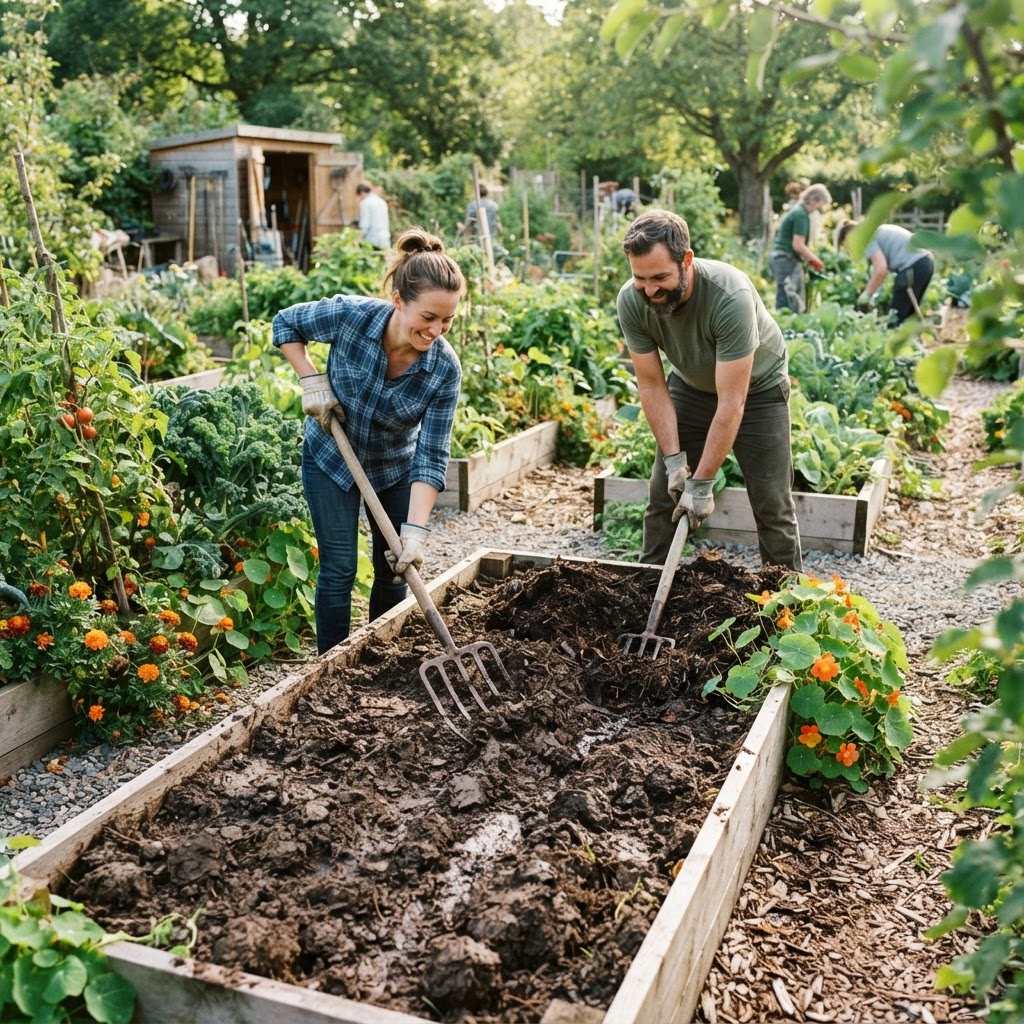
If compaction is the root cause, targeted aeration can make a significant difference. Use a broadfork or garden fork to mechanically loosen compacted soil. Push the tines in deeply and gently rock the fork back and forth without fully inverting the soil — you want to fracture the compacted layer while preserving soil structure as much as possible.
For persistent hardpan problems, consider a one-time deep tillage effort in autumn to break up the layer, followed by planting a deep-rooted cover crop like daikon radish. These "tillage radishes" send roots deep into the soil and, as they decompose over winter, leave channels that improve drainage naturally.
Install Simple Drainage Channels
If your plot collects runoff from surrounding areas, redirecting that water before it reaches your beds can dramatically reduce waterlogging. Work with your community garden committee to create simple swales — shallow channels dug along the contour of the land — that direct water away from growing areas. Even a modest improvement in surface drainage can keep your soil from becoming saturated in the first place.
Add Coarse Organic Matter
Mixing in coarse organic materials like wood chip mulch, straw, or composted bark helps open up the soil's pore structure and improves drainage over time. Note that raw wood chips incorporated into the soil can cause temporary nitrogen depletion, so it's best to use well-aged or composted materials, or to apply wood chips as a surface mulch rather than digging them in.
Organic Matter and Soil Biology to the Rescue
Long-term improvement of poorly drained soil is fundamentally a biological project. The goal is to build a thriving community of aerobic soil organisms whose activity naturally improves soil structure and drainage over multiple seasons.
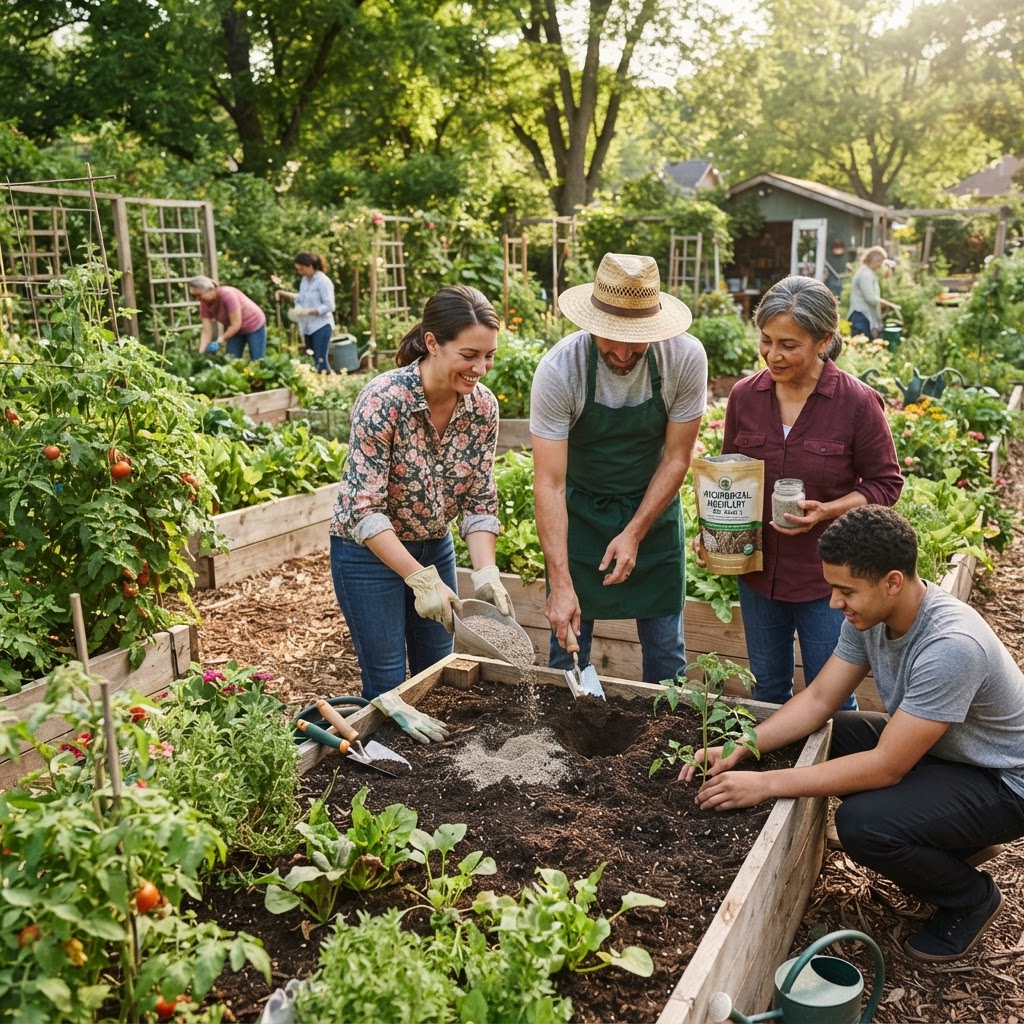
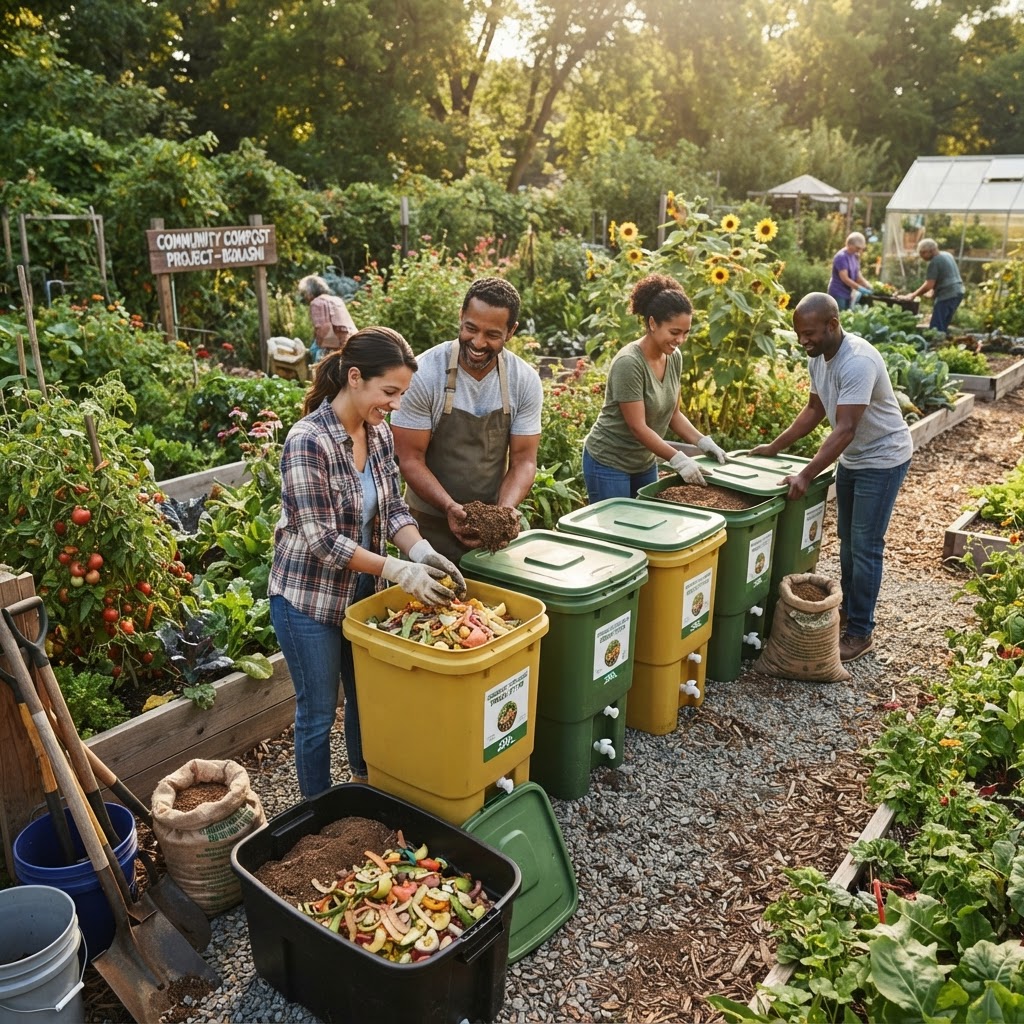
Compost is your most powerful tool. Well-made, mature compost introduces diverse beneficial microorganisms and provides the organic matter that soil aggregates form around. Apply generously — several centimetres across the surface — and work it into the top layer of soil each season.
Avoid digging wet soil. This is critical. Working clay soil when it's saturated destroys its structure, compressing aggregates and making drainage worse. Wait until soil has dried sufficiently that a handful squeezed in your fist crumbles apart rather than holding its shape.
Cover crops build soil between seasons. Planting cover crops like clover, vetch, or rye in beds that aren't producing food crops keeps the soil biologically active, adds organic matter, and prevents compaction from rainfall. Legume cover crops also fix atmospheric nitrogen, partially replacing what's lost through denitrification.
Earthworms are indicators and allies. A healthy population of earthworms dramatically improves soil drainage by creating a network of channels as they move through the soil. Their castings also improve soil aggregate stability. If your soil has few earthworms, it's a sign that the biology is struggling — feeding the soil with compost and reducing disturbance will help populations recover.
Raised Beds and Alternative Growing Systems
Sometimes the most practical solution to severe drainage problems is to work above the problematic soil rather than trying to fix it immediately.
Raised beds filled with a quality growing mix allow you to create ideal growing conditions while your in-ground soil slowly improves over time. Even modest raises of 20–30 centimetres above grade can keep roots out of the saturated zone and dramatically improve your growing results.
If constructing raised beds isn't permitted or practical in your community garden, no-dig lasagne beds built on top of the existing soil can provide a similar benefit. Layer cardboard, compost, straw, and other organic materials directly on the surface. Over time, these layers break down and the improved biology moves down into the underlying soil.
Container growing in areas of your plot that are most prone to waterlogging allows you to keep productivity up while working on longer-term drainage improvements elsewhere.
Common Mistakes to Avoid
Adding Sand to Clay Soil Without Enough Organic Matter
A widespread myth suggests that adding sand to clay will improve drainage. In practice, without adding very large quantities, mixing sand into clay soil creates a concrete-like substance that drains worse than either material alone. Focus on organic matter instead.
Tilling Wet Soil
Working waterlogged soil with a fork, spade, or rotary tiller destroys soil structure and creates a compacted, airless layer called a tillage pan just below the working depth. Always wait until soil reaches the right moisture level before digging.
Applying Fresh Manure to Anaerobic Soil
Fresh manure adds soluble nitrogen that will be lost immediately to denitrification in anaerobic conditions, and the additional organic load can worsen oxygen depletion. Use well-composted materials instead.
Ignoring the Problem and Planting Anyway
It's tempting to push ahead with planting despite wet conditions, but setting plants into anaerobic soil means they're fighting an uphill battle from the start. Addressing drainage before planting gives your crops a far better chance.
Overwatering as a Habit
Even in plots without natural drainage problems, overwatering creates artificially anaerobic conditions. Learn to check soil moisture by feel before watering — if the soil is still moist several centimetres down, hold off.
Tips for Success
- Start a soil diary. Record rainfall, how quickly water drains from your plot, and how plants perform. Over time, patterns emerge that help you make smarter management decisions.
- Test your soil. A basic soil test will reveal pH, nutrient levels, and organic matter content. Anaerobic conditions often shift pH, and knowing your baseline helps you track improvement.
- Build soil biology with diversity. Different cover crop species support different microbial communities. Rotating cover crops just as you rotate vegetables builds a richer, more resilient soil biology.
- Mulch consistently. Keeping soil covered with organic mulch protects it from rainfall impact (which causes surface compaction), moderates moisture fluctuations, and feeds soil organisms continuously.
- Be patient. Rebuilding soil structure and biology in a chronically waterlogged plot takes time — often two to three growing seasons of consistent effort. Celebrate incremental improvements and don't get discouraged.
- Connect with your garden community. Drainage problems that affect your plot often affect neighbours too. Collective solutions like shared swales or communal composting programs are more effective than individual efforts.
Conclusion
Managing anaerobic conditions in poorly drained community garden soil is one of those challenges that rewards patience, observation, and a willingness to work with natural processes rather than against them. The underlying principle is straightforward: oxygen supports life, and your job is to help air get back into the soil and stay there.
By understanding why anaerobic conditions develop, recognising the warning signs early, and applying practical strategies — from breaking up compaction and building organic matter to installing drainage channels and using raised beds — you can transform even a persistently soggy plot into a productive growing space. The soil biology will respond, earthworms will return, nutrients will become available again, and your plants will thrive.
Community gardening is, at its heart, a long-term investment in a shared piece of land. Every shovelful of compost you add, every cover crop you plant, and every season you resist tilling wet soil is a contribution not just to your own harvest, but to the health of that land for every gardener who comes after you.