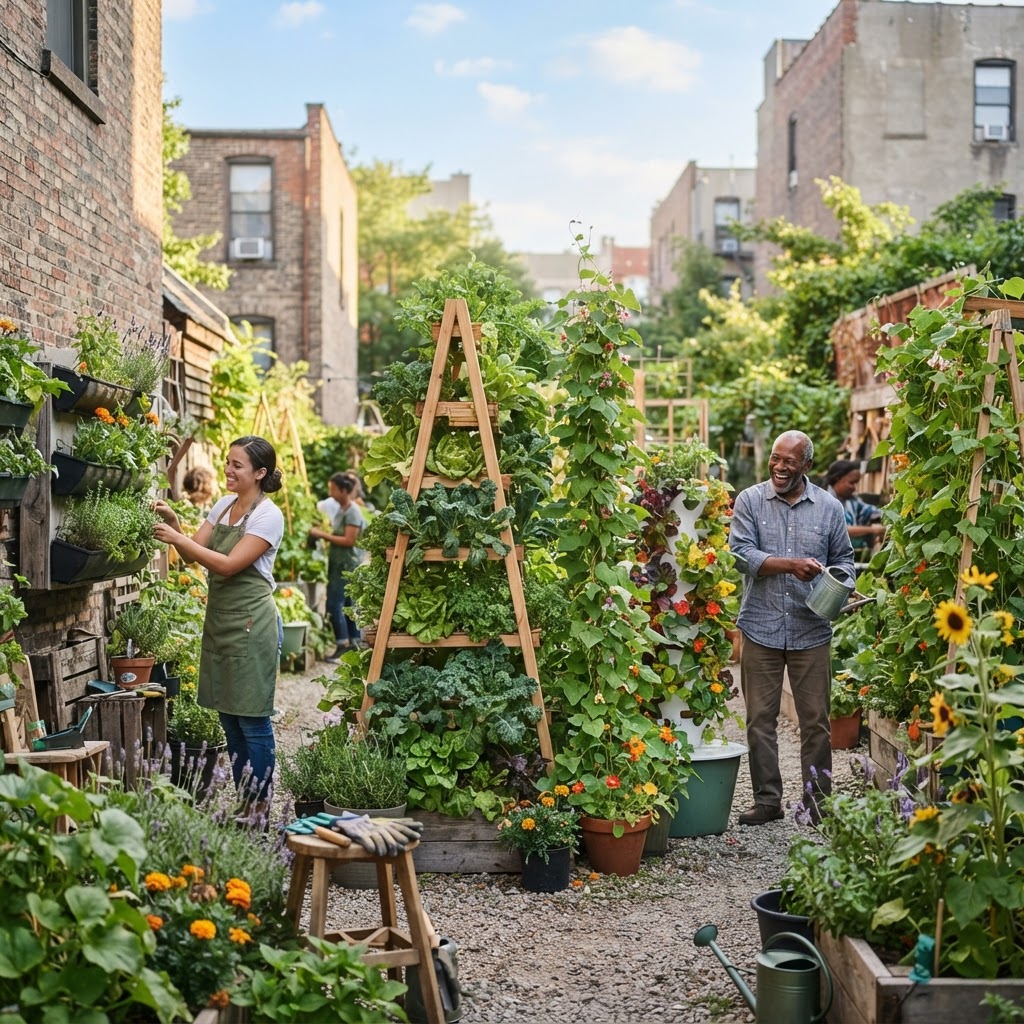
Community gardens are often a beautiful example of cooperation, creativity, and making the most of limited resources. But what happens when your plot feels cramped, your neighbors are growing closer than your tomatoes, and you're still dreaming of a bountiful harvest? Vertical growing structures might just be your best solution. By thinking upward instead of outward, community gardeners can dramatically expand their productive growing area, add visual interest to shared spaces, and create a more organized and enjoyable environment for everyone involved.
This guide is designed to help beginner and intermediate community gardeners understand how to thoughtfully integrate vertical growing structures into small shared spaces — without causing conflict, creating shade problems, or overwhelming your plot.
Getting Started
Before you pound a single stake into the ground or zip-tie your first piece of trellis netting, it's important to pause and think about the unique context of community gardening. Unlike a private backyard, a community garden is a shared resource governed by agreed-upon rules and social dynamics. Vertical structures, while incredibly useful, can create shade, block sightlines, or infringe on neighboring plots if not planned carefully.
Start by reviewing your community garden's guidelines or bylaws. Many gardens have specific rules about the height of structures, where they can be placed, and what materials are permitted. Some gardens welcome elaborate trellises and pergolas; others restrict structures to a certain height or require approval from a garden committee.
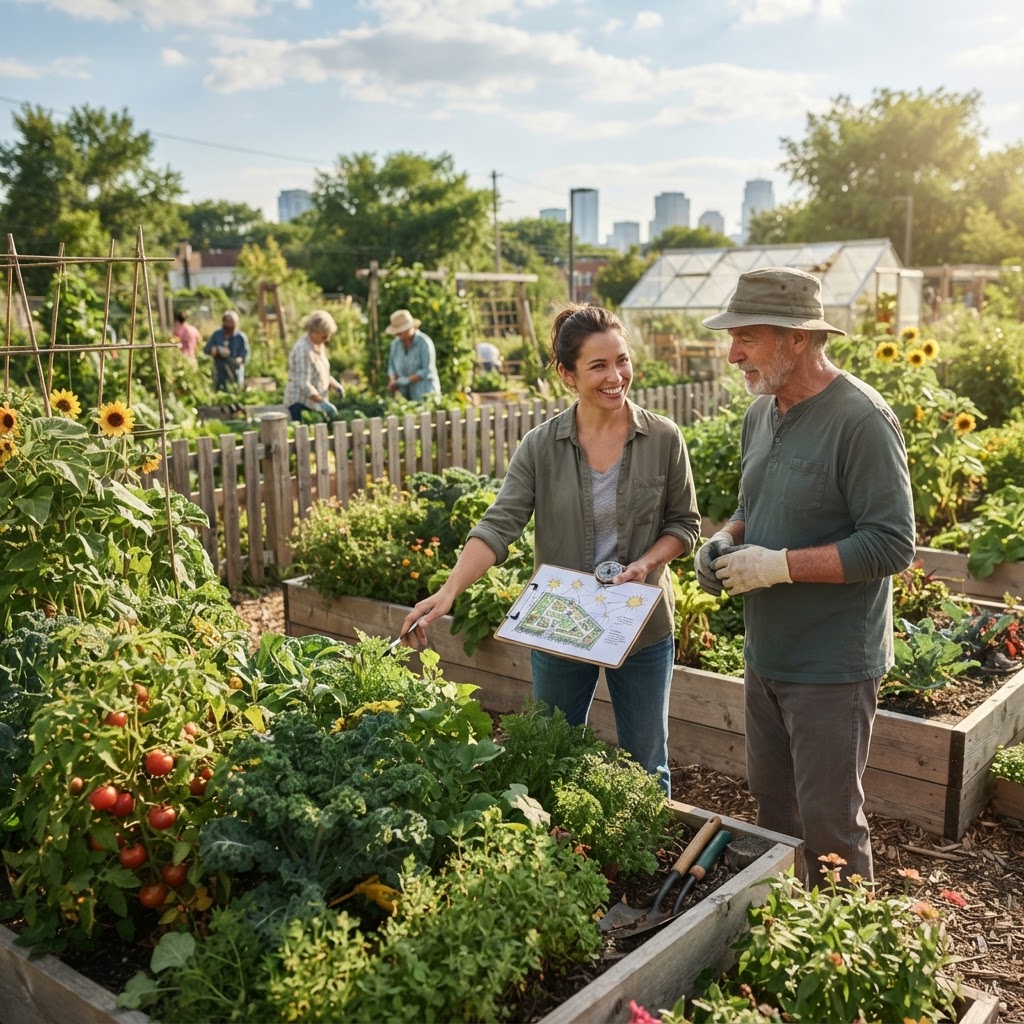
Once you know the rules, have a conversation with your neighboring plot holders. A simple heads-up about your plans — and an invitation for their input — can prevent misunderstandings and even spark collaborative ideas. Community gardening thrives on communication, and introducing a significant structure is a great opportunity to strengthen those relationships.
Finally, assess the specific conditions of your plot. Take note of sun patterns throughout the day, prevailing winds, and soil quality near the edges of your space. All of this information will help you make smart decisions about what to build, where to place it, and how to maintain it over time.
Understanding Your Shared Space
Every community garden plot is different. Some are long and narrow; others are wide and open. Understanding the physical dimensions and environmental conditions of your space will directly inform the type of vertical structure that makes sense for you.
Sun and Shade Mapping
Vertical structures cast shadows. This is simply a fact of physics, and ignoring it can create real problems — both for your crops and your neighbors'. Before installing anything taller than a standard plant stake, spend a day observing where the sun travels across your plot. Tall structures are best positioned on the north side of your plot (in the Northern Hemisphere) so that their shadows fall behind them rather than across your growing area or into neighboring beds.
Soil and Root Considerations
Some vertical structures, particularly those with deep anchor posts, can disturb root systems. If your plot is adjacent to established perennial plantings or communal fruit trees, check with garden coordinators before digging. Compacted or poor-quality soil near pathways may also need amendment before it can support the base of a heavy structure.
Wind Exposure
Many community gardens are located in open urban spaces that channel wind in unexpected ways. A tall trellis or wall-mounted pallet planter can act like a sail in strong wind. Consider how exposed your plot is and plan accordingly — either by choosing lower-profile structures or by ensuring your vertical installations are particularly well-anchored.
Types of Vertical Growing Structures
There is no single "right" vertical structure for a community garden. The best choice depends on your budget, your plants, your plot dimensions, and your garden's rules. Here's a rundown of the most practical and commonly used options.
Trellises
Trellises are one of the most versatile and accessible vertical structures available. They come in wood, metal, and plastic varieties and can be freestanding or attached to a fence or raised bed. Simple A-frame trellises made from bamboo and twine are inexpensive, easy to assemble, and can be disassembled at the end of the season — ideal for gardeners who want flexibility.
Cattle Panels and Hog Wire Arches
Cattle panels are rigid wire panels typically used in livestock fencing but beloved by gardeners for their strength and durability. Bent into an arch over a raised bed, they create a sturdy tunnel structure that can support heavy crops like melons or pumpkins. These are a longer-term investment but are extremely durable and reusable year after year.
Pallet Planters
Reclaimed wooden pallets can be stood upright and lined with landscape fabric to create pocketed planting surfaces. These work particularly well for strawberries, herbs, and small flowering plants. They're inexpensive, widely available, and have a rustic aesthetic that fits well in community settings. Make sure any pallet you use is stamped "HT" (heat treated) rather than "MB" (methyl bromide treated), as the latter has been treated with harmful chemicals.
Tower Planters and Pocket Planters
Fabric or plastic tower planters allow you to stack multiple planting pockets vertically in a small footprint. These are excellent for herbs, lettuces, and strawberries and are easy to move, making them practical for renters or gardeners who change plots seasonally.
Teepee Structures
A classic teepee structure — made from three or more long poles tied at the top — is one of the simplest vertical supports you can build. It's ideal for pole beans, cucumbers, and certain varieties of peas. Teepees have the added advantage of being visually charming, which contributes positively to the shared aesthetic of a community garden.
Best Plants for Vertical Growing
Not every plant is suited to vertical cultivation, but a surprisingly wide range of crops thrive when given something to climb or lean on.
Climbers and Vines: Pole beans, cucumbers, peas, and indeterminate tomatoes are natural climbers. They actively seek support and will wind themselves around a trellis with minimal intervention.
Trained Plants: Some plants, like squash or melons, aren't natural climbers but can be trained upward with careful guidance and the occasional cloth sling to support heavy fruits as they develop.
Container and Pocket Plants: Strawberries, herbs like basil, parsley, and chives, lettuces, and edible flowers all thrive in pocket or tower planters where traditional climbing isn't required.
Perennial Climbers: If your community garden allows perennial plantings, edible perennials like hardy kiwi, passionflower, or grape vines can add multi-year value to a well-built vertical structure.
Designing for Community and Cooperation
In a shared garden setting, design choices extend beyond personal preference. Your vertical structures contribute to the visual and functional experience of everyone in the garden.
Aesthetics and Visual Harmony
When choosing materials and styles, consider how your structures will look alongside neighboring plots. A mismatched collection of structures can feel chaotic, while thoughtfully chosen materials — a consistent use of natural wood, for example — can create a sense of cohesion. Some community gardens even coordinate on shared vertical structures along communal pathways or fences, which can be a wonderful group project.
Creating Privacy Without Blocking Light
Tall plantings on a trellis can serve as a gentle visual screen between plots, which many gardeners appreciate. However, there's a meaningful difference between creating soft, natural privacy with climbing plants and installing a structure that blocks your neighbor's access to sunlight. Aim for structures and plantings that soften boundaries without hardening them.
Communal Vertical Structures
Some gardens invest in shared vertical infrastructure — a communal trellis wall along the garden's perimeter, for instance, or an arched entryway covered in climbing roses or beans. If you have ideas for communal vertical features, bring them to your garden's organizing committee. Collaborative projects like these can enhance the garden's identity and give members a shared sense of ownership.
Installation and Maintenance Considerations
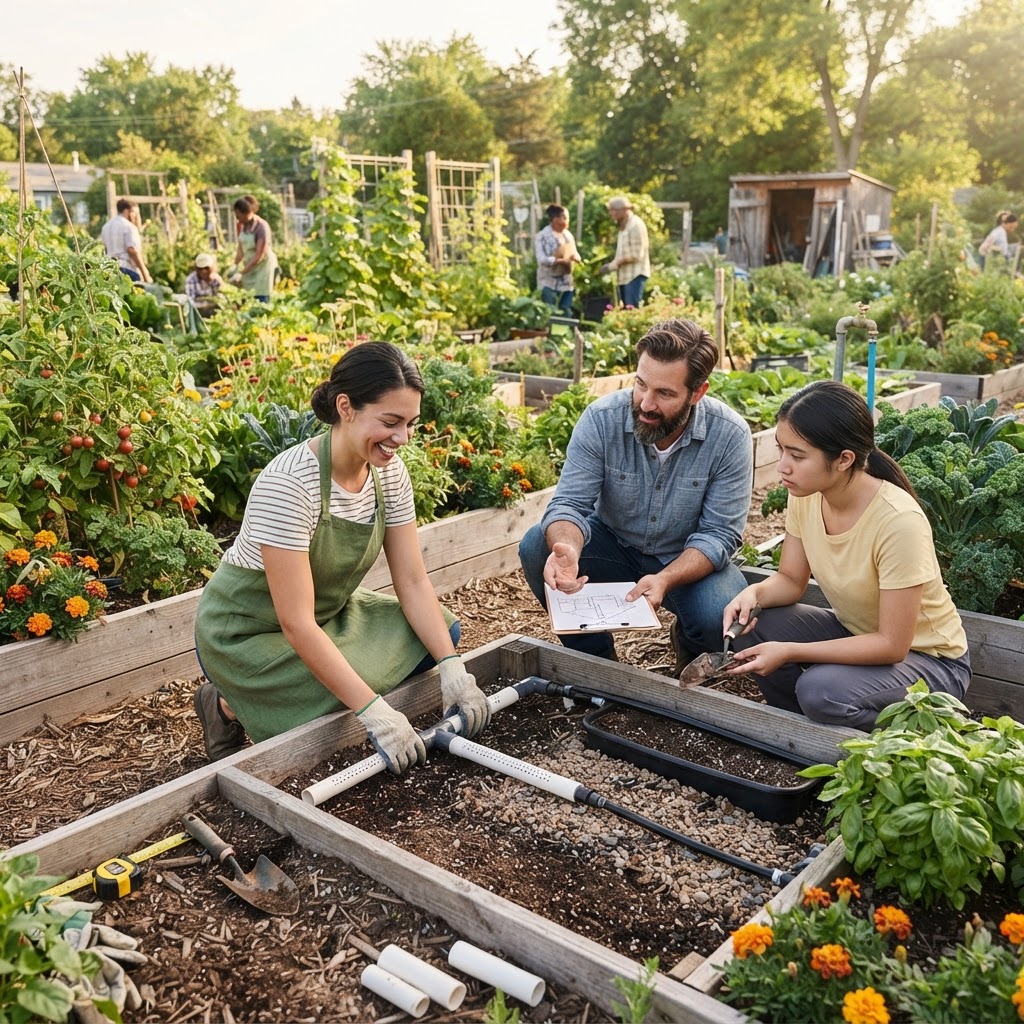
Installing a vertical structure properly is just as important as choosing the right one. A poorly secured trellis that topples over in a summer storm isn't just inconvenient — it can damage neighboring plants, injure visitors, and create unnecessary conflict.
When anchoring posts or stakes, follow the general guideline that posts should be buried to a depth of at least one-third of their total length. For a six-foot post, that means two feet in the ground. Use a rubber mallet rather than a metal hammer to avoid splitting wooden posts, and check stability before loading the structure with plants.
Maintenance is ongoing. Check your structures regularly for signs of rot, rust, or loosening. Wooden trellises may need repainting or sealing. Wire structures can develop sharp edges over time that should be addressed for safety. At the end of each growing season, take time to clean and inspect your structures before storing or leaving them in place for winter.
Common Mistakes to Avoid
Even experienced gardeners make missteps when it comes to vertical growing in shared spaces. Here are some of the most common pitfalls and how to sidestep them.
Installing without checking garden rules: Always verify what's permitted before building. Some gardens restrict height, materials, or placement zones.
Ignoring shadow impact on neighbors: A tall trellis on the south side of your plot (in the Northern Hemisphere) can cast significant shade on your neighbor's bed. Always think about sun angles before placing tall structures.
Using untreated or unsafe materials: Avoid chemically treated wood or pallets marked "MB." These can leach harmful substances into your soil.
Overloading light structures: A bamboo teepee might look sturdy, but loading it with heavy squash or a neglected tomato plant can cause collapse. Match your structure's strength to the weight of your intended crops.
Planting climbers too close together: Crowded vertical plantings reduce airflow, invite disease, and limit each plant's access to sunlight. Follow recommended spacing guidelines even when growing vertically.
Neglecting end-of-season cleanup: Leaving a deteriorating or broken vertical structure in place over winter damages the garden's appearance and may create hazards for early-season visitors.
Tips for Success
Vertical gardening in shared spaces is immensely rewarding when approached thoughtfully. Here are some practical tips to help you get the most out of your setup.
- Start simple. Your first vertical structure doesn't need to be elaborate. A basic A-frame trellis for pole beans is a wonderful starting point that teaches you a lot about vertical growing with minimal investment.
- Plan for access. Make sure you can reach all parts of your vertical planting for watering, harvesting, and maintenance. Structures that require you to step into neighboring plots to access are a guaranteed source of friction.
- Use your structure year-round. Off-season, a trellis can support netting for frost protection, provide a frame for shade cloth during heat waves, or hold signage for community events.
- Document your setup. Take photos at the beginning and end of each season. This helps you refine your approach year over year and is useful if questions arise about your plot at the end of a season.
- Involve your neighbors. If a neighbor's bed could benefit from a shared trellis along your common border, propose the idea. Shared structures reduce material costs and build community bonds.
- Choose perennial structures over annual ones where possible. A well-built metal or hardwood trellis will outlast many seasons of growing and offer better return on investment than replacing cheap structures annually.
Conclusion
Vertical growing structures offer an elegant solution to one of community gardening's most persistent challenges: how to grow abundantly in a limited, shared space. By building upward thoughtfully — with attention to sun angles, neighbor relationships, structural integrity, and garden rules — you can dramatically expand your growing potential without overstepping your boundaries or creating conflict.
The key is to approach vertical gardening not just as a personal productivity strategy, but as a contribution to the shared environment you and your fellow gardeners have built together. The best vertical structures don't just support your plants — they enhance the beauty, organization, and spirit of the whole garden.
Whether you start with a simple bamboo teepee for your beans or eventually invest in a sturdy cattle panel arch, you'll quickly discover that growing up is one of the most satisfying things you can do in a community garden. Happy growing!