Introduction
Water is arguably the most precious resource in any garden, and in community settings, managing it wisely becomes both an environmental responsibility and a practical necessity. As water costs rise and droughts become more frequent in many regions, community gardens are increasingly looking toward sustainable alternatives to municipal tap water. One of the most promising—and often underutilized—solutions is the greywater system.
When thoughtfully designed and properly managed, greywater systems can dramatically reduce a community garden's reliance on potable water, particularly in ornamental zones where flowering beds, native plant displays, and decorative borders thrive. This guide is designed to walk beginner and intermediate community gardeners through everything they need to know to plan, install, and maintain a greywater system specifically tailored for ornamental areas of their shared space.
Getting Started
Before you dig a single trench or purchase any hardware, successful greywater implementation in a community garden requires a solid foundation of planning, communication, and research.
Assess Your Garden's Needs and Layout
Start by walking through your community garden and identifying your ornamental zones. These are areas dedicated to flowers, decorative grasses, shrubs, trees, and non-edible plants. Map them out and estimate their size. Ornamental zones are your primary target for greywater application because, unlike vegetable beds, they carry minimal risk of food contamination.
Consider the following questions as you assess:
- How large are your ornamental areas in total square footage?
- What is the current water source, and how much does it cost to irrigate these areas?
- Is there an existing structure—a shed, community center, or washing station—from which greywater can be sourced?
- What is the slope and drainage profile of your ornamental beds?
Engage Your Community
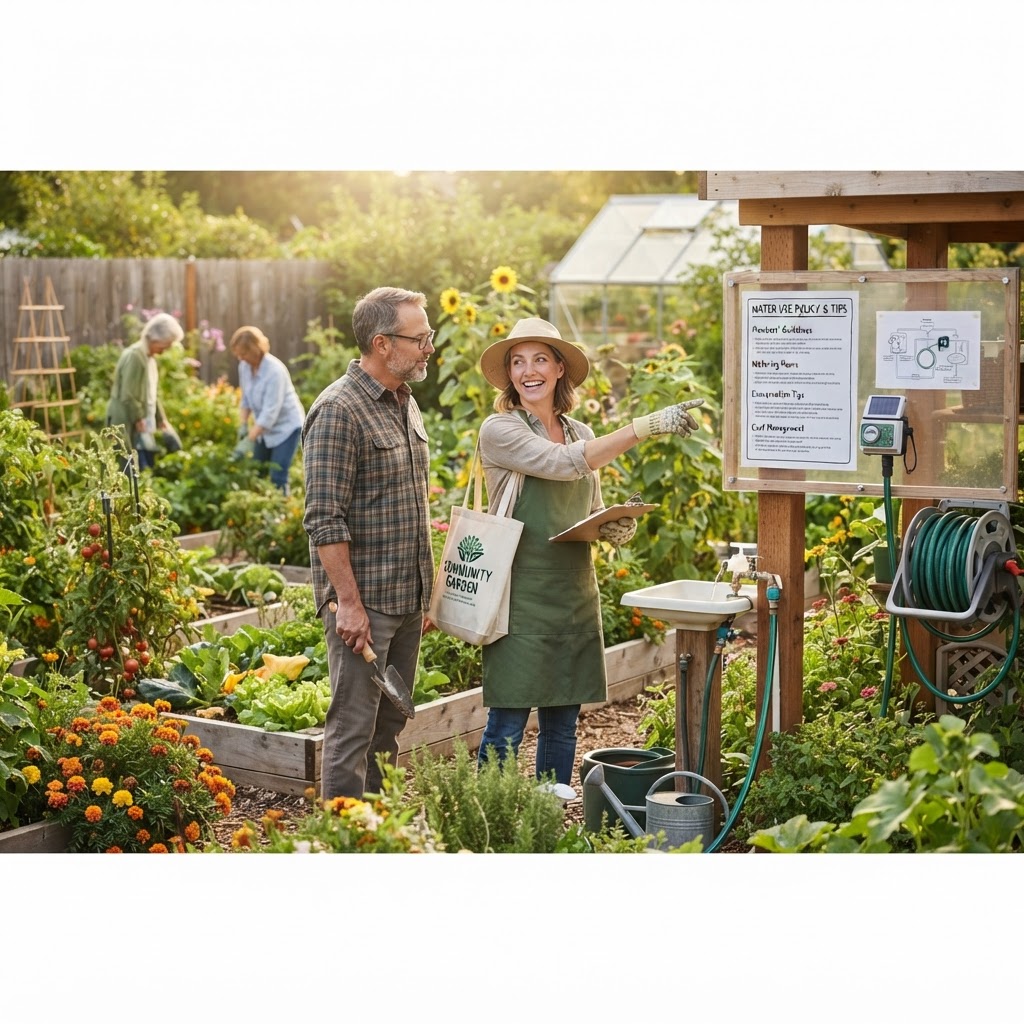
Community gardens operate on shared ownership and shared decision-making. Before proceeding with any greywater system, hold a meeting or organize a survey to gauge member interest and address concerns. Some members may have questions about hygiene, aesthetics, or legal compliance. Being transparent about the plans and involving the community from the beginning makes implementation smoother and builds lasting buy-in.
Research Local Regulations
This step cannot be skipped. Greywater regulations vary enormously by country, state, province, and municipality. In some regions, simple greywater reuse systems are explicitly permitted and even encouraged. In others, they require permits or are outright prohibited. Contact your local water authority or municipality before committing to a design.
Understanding Greywater: What It Is and What It Isn't
Greywater refers to wastewater generated from domestic or light-use sources that does not include toilet waste. Common greywater sources include:
- Laundry rinse water (from washing machines)
- Sink water from handwashing stations or utility sinks
- Shower and bath water (less common in garden settings but relevant to community centers)
Greywater is distinct from blackwater, which is wastewater containing fecal matter, urine, or food waste from kitchen sinks. Blackwater requires full sewage treatment and must never be used in garden irrigation.
It's also worth distinguishing greywater from rainwater harvesting. While both are sustainable water practices, rainwater is collected from rooftops or surfaces before it contacts the ground, whereas greywater has already been used for a domestic purpose. Both can be part of an integrated water management strategy in a community garden, but they operate through different systems and carry different considerations.
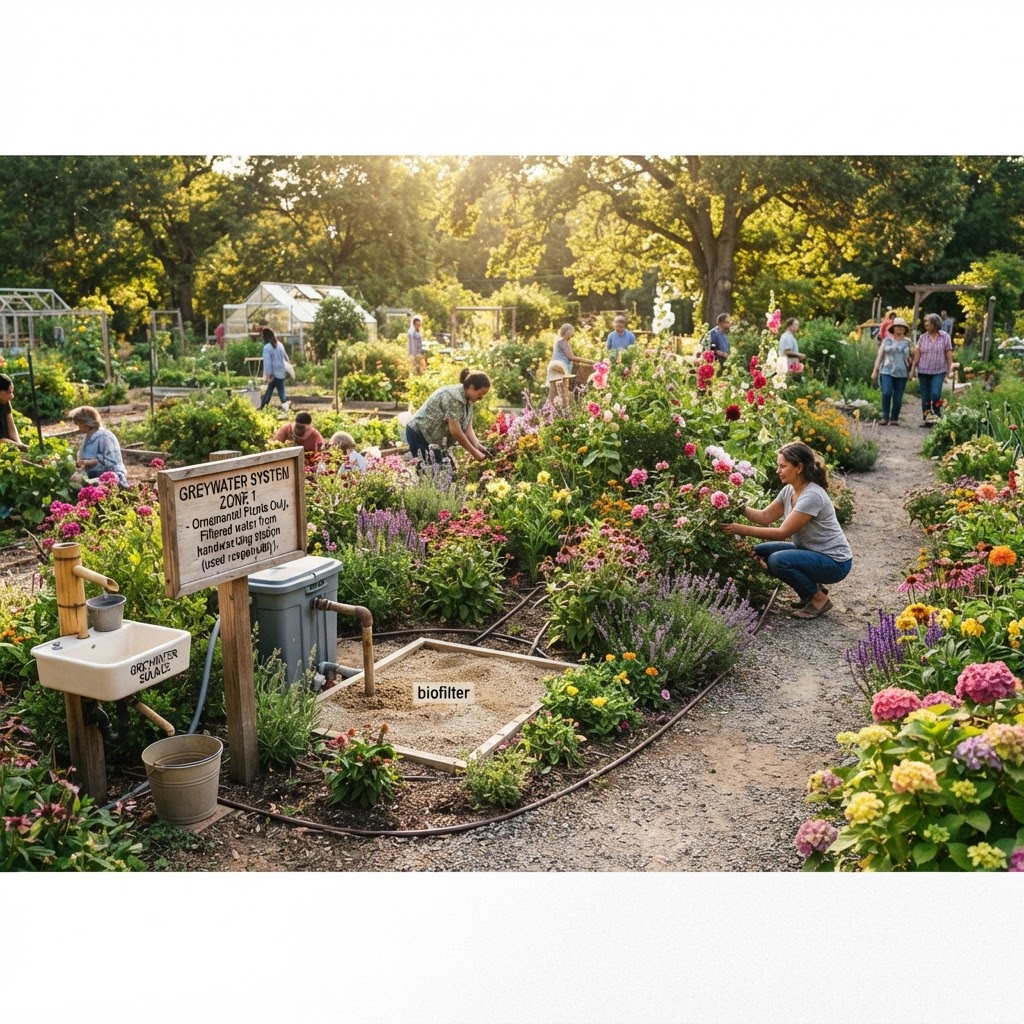
In a community garden context, the most practical greywater sources are typically a hand-washing station near the entrance, a utility sink in a tool shed, or a dedicated laundry-to-landscape setup if the garden has a washing facility.
Why Ornamental Zones Are Ideal for Greywater Use
Ornamental zones are the perfect destination for greywater for several important reasons:
No direct food contact risk. The primary concern with greywater in vegetable gardens is the potential for pathogens to contaminate edible crops, particularly if water contacts the parts of plants people consume. In ornamental beds, this concern largely disappears, making greywater a much safer and more appropriate choice.
Tolerance for variable water quality. Many ornamental plants—especially natives and drought-tolerant species—are robust and forgiving. They can handle occasional variations in water chemistry more gracefully than sensitive food crops.
High water demand. Decorative borders, flowering perennials, and ornamental shrubs often require consistent moisture to maintain their visual appeal, especially during dry seasons. Greywater can reliably meet this demand without drawing on potable supplies.
Buffer zones. Ornamental areas often serve as buffer zones between high-traffic paths and more sensitive garden beds. Using greywater here makes logistical sense—the distribution points are often naturally closer to sheds and washing stations where greywater originates.
Types of Greywater Systems Suited for Community Gardens
Laundry-to-Landscape Systems
One of the simplest and most widely adopted approaches, laundry-to-landscape (L2L) systems divert washing machine or utility sink outlet water directly to mulched basins in ornamental beds. The water flows through flexible hose or PVC pipe from the source to sub-surface or mulch-covered outlets. This type requires no pump in most single-story or gently sloped setups.
This is an excellent starting point for community gardens with a garden shed that includes a utility sink or outdoor washing station.
Branched Drain Systems
A branched drain system uses gravity to distribute greywater to multiple locations through a network of pipes and splitters. These systems are slightly more complex to design but allow for efficient distribution across a wider ornamental zone. Each branch terminates in a mulched basin that absorbs and filters the water before it reaches plant roots.
The key advantage here is coverage: a single greywater source can feed multiple decorative beds spread across the garden without any electrical components or pumping.
Constructed Wetland Systems
For larger or more ambitious community gardens, a small constructed wetland can both treat and distribute greywater. These systems use a series of planted marsh areas filled with gravel and wetland-tolerant plants (such as reeds or cattails) that naturally filter the water as it passes through. The treated effluent can then be directed to broader ornamental areas.
Constructed wetlands are more expensive and require more expertise to establish, but they serve a dual purpose—treating water while also becoming an attractive feature of the garden landscape.
Surge Tanks and Pump Distribution
Where gravity alone cannot do the work—such as in flat urban lots or rooftop gardens—a surge tank collects greywater and a small pump distributes it through drip irrigation lines to ornamental beds. This setup offers the most control but also requires the most maintenance and has ongoing energy costs.
Design Considerations for Community Settings
Designing for a community garden differs from designing for a single household. Keep these factors in mind:
Multiple users and varying habits. What people wash at the garden sink will vary. Establish clear guidelines about what can and cannot go down the greywater-connected sink (no bleach, no harsh chemical cleaners, no pesticide rinsate).
Accessible maintenance points. System components like filters, valves, and surge tanks should be easy for multiple people to access and check. Label everything clearly.
Child and pet safety. Greywater should never pool on the surface or be accessible to children or animals. All distribution should occur below a mulch layer or through sub-surface drip lines. Install covers on any collection vessels.
Signage. Clear, friendly signage at greywater-fed areas lets visitors know that these beds are irrigated with recycled water. This promotes transparency and education within the community.
System capacity. Match your system's capacity to what your source can realistically produce. An undersized system will fail to meet irrigation needs; an oversized one may create maintenance burdens.
Common Mistakes to Avoid
Even well-intentioned greywater projects can run into problems. Here are the most common pitfalls community gardeners encounter:
Using greywater near edible crops. Even when intending to direct greywater only to ornamentals, poorly mapped or mislabeled pipes can send water toward vegetable beds. Always double-check your routing and mark pipes clearly.
Ignoring soap and detergent chemistry. Many conventional soaps and detergents contain sodium, which over time can degrade soil structure and harm plants. Choose plant-friendly, low-sodium, biodegradable soaps for any sink or washing station connected to your greywater system.
Allowing greywater to pool or pond. Standing greywater is a mosquito breeding ground and a sanitation concern. All greywater must infiltrate the soil promptly. If water is pooling, your system needs attention—check for blockages, adjust flow rates, or improve mulching.
Storing greywater for extended periods. Greywater begins to decompose and develop unpleasant odors within 24 hours. It should be used the same day it is generated. Systems should be designed for immediate distribution, not storage.
Skipping the mulch layer. Mulch is not optional—it is essential. A thick layer of wood chip or straw mulch over distribution points protects soil organisms, prevents surface contact with the water, reduces evaporation, and maintains a healthy infiltration zone.
Neglecting maintenance. Filters clog, pipes develop roots, and fittings loosen. A greywater system that is installed and forgotten will fail. Assign maintenance responsibilities clearly among garden members.
Assuming one design fits all. Every community garden has a unique layout, soil type, water source, and membership. Avoid copying another garden's system wholesale without adapting it to your specific conditions.
Tips for Success
-
Start small. Begin with a single ornamental bed served by one greywater source. Learn from this pilot before expanding the system.
-
Choose the right plants. Native plants, ornamental grasses, shrubs, and perennials generally handle greywater better than delicate annuals or acid-loving species. Avoid plants sensitive to sodium if your water source involves high-sodium soaps.
-
Use generous mulch. Aim for a minimum of 10 centimeters (about 4 inches) of organic mulch over your distribution zones. Replenish it seasonally.
-
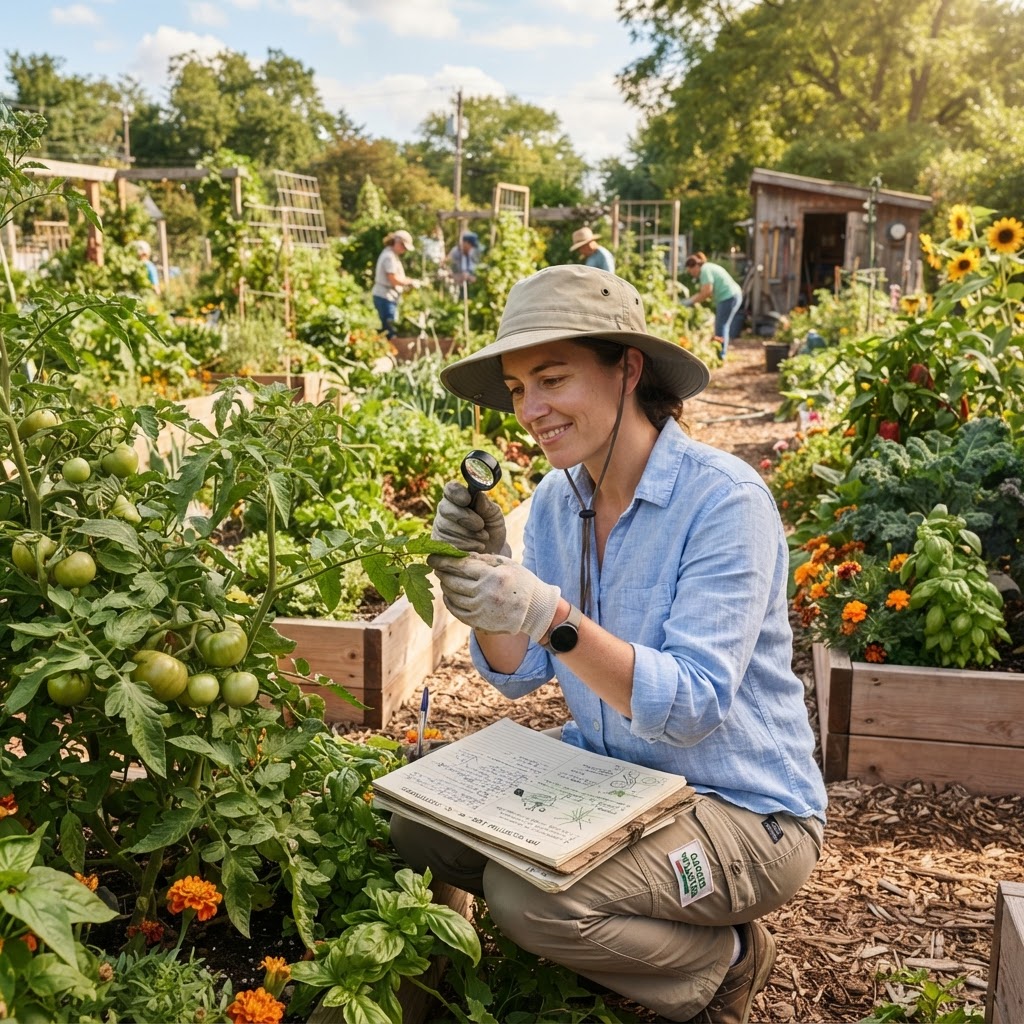
Create a simple log. Keep a shared notebook or digital log where members note when the system was last checked, any issues observed, and maintenance performed. This builds collective responsibility.
-
Educate all members. Run a brief workshop or create a laminated guide for new and existing members explaining how the system works, what can go down the connected sinks, and who to contact with concerns.
-
Plan for dry and wet seasons. Your greywater output may fluctuate with garden usage. Ensure you have a bypass valve so water can be redirected to the regular drain during periods of low garden activity or heavy rainfall.
-
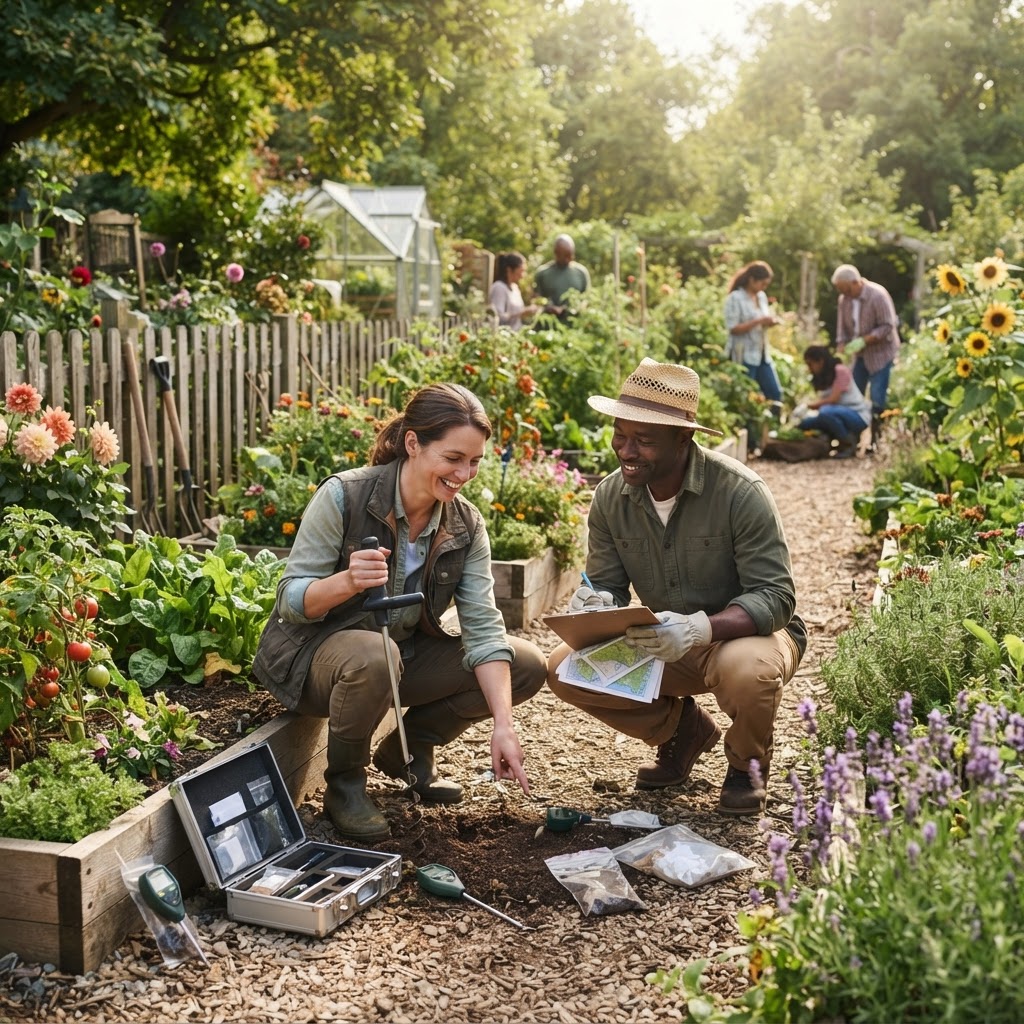
Test your soil periodically. Over time, sodium and other compounds can accumulate. An annual soil test in greywater-irrigated areas helps you catch any imbalances early and amend accordingly.
Maintenance and Monitoring
A well-designed system is only as good as its upkeep. Establish a regular maintenance schedule that includes:
- Weekly checks of outlets and mulch zones for pooling or odors
- Monthly inspection of all pipe connections, filters, and valves
- Seasonal cleaning of any surge tanks, filters, or distribution manifolds
- Annual soil testing of irrigated ornamental beds
Assign a rotating "water team" among garden members so that responsibility is shared and no single person bears the entire burden.
Legal and Safety Considerations
Before implementation, obtain any necessary permits and document your compliance with local regulations. Even in permissive jurisdictions, following best practice guidelines protects your community garden from liability.
Always communicate transparently with any landlords, municipal bodies, or parks departments that have authority over your garden space. Having a written record of approvals and the design specifications of your system is valuable protection.
Never use greywater from sources that may contain chemicals such as pesticide-rinse water, chemical fertilizer residue, or cleaning agents with disinfectants like bleach. These can harm soil biology and plant health, and may violate regulations.
Conclusion
Greywater systems offer community gardens a genuinely sustainable path toward reduced water consumption, lower costs, and a deeper connection to responsible land stewardship. By directing carefully managed greywater toward ornamental zones, community gardens can keep their decorative spaces lush and beautiful while preserving clean water for the people and food crops that need it most.
The journey toward a successful greywater system begins with curiosity, grows through community conversation, and flourishes through attentive maintenance and ongoing learning. Whether you start with a simple laundry-to-landscape pipe serving a single flower border or work toward a fully planted constructed wetland, every step taken is a meaningful contribution to a more water-wise garden culture.
At Community Garden Shop, we believe that practical, accessible knowledge empowers gardeners to make lasting positive change. We hope this guide gives your community the confidence to explore greywater systems as part of a broader commitment to sustainable gardening.