Power tillers and mowers are among the most transformative tools available to community gardeners. When used correctly, they save hours of backbreaking labor and help maintain beautiful, productive garden spaces. However, these machines come with real risks that every gardener — beginner or experienced — needs to take seriously. This guide will walk you through everything you need to know to operate power tillers and mowers safely, build your confidence through proper training, and get the most out of these essential machines.
Getting Started
Before you ever pull a starter cord or turn an ignition key, the most important investment you can make is time — time spent learning about your machine, reading its manual, and understanding the environment you'll be working in.
Community gardens present unique challenges compared to private home gardens. Multiple people may use the same equipment, plots are often in close proximity to one another, and gardeners of varying skill levels share the same space. This makes a culture of safety not just a personal matter but a community responsibility.
Your first steps as a new operator should include:
-
Reading the owner's manual from cover to cover. This isn't optional. Every machine is different, and the manual contains critical safety warnings, maintenance schedules, and operating procedures specific to your model.
-
Getting a hands-on walkthrough from an experienced operator. Reading about equipment and actually operating it are two very different things. Ask a garden coordinator or experienced volunteer to demonstrate the machine before you use it alone.
-
Inspecting the equipment before every use. A pre-operation check takes less than five minutes but can prevent accidents and costly repairs.
-
Familiarizing yourself with the garden layout. Know where underground irrigation lines are, where other gardeners are working, and where children or pets may be present.
Starting slow and asking questions is always the right approach. No one becomes proficient with power equipment overnight, and there's no shame in taking extra time to learn properly.
Understanding Your Equipment
Power Tillers
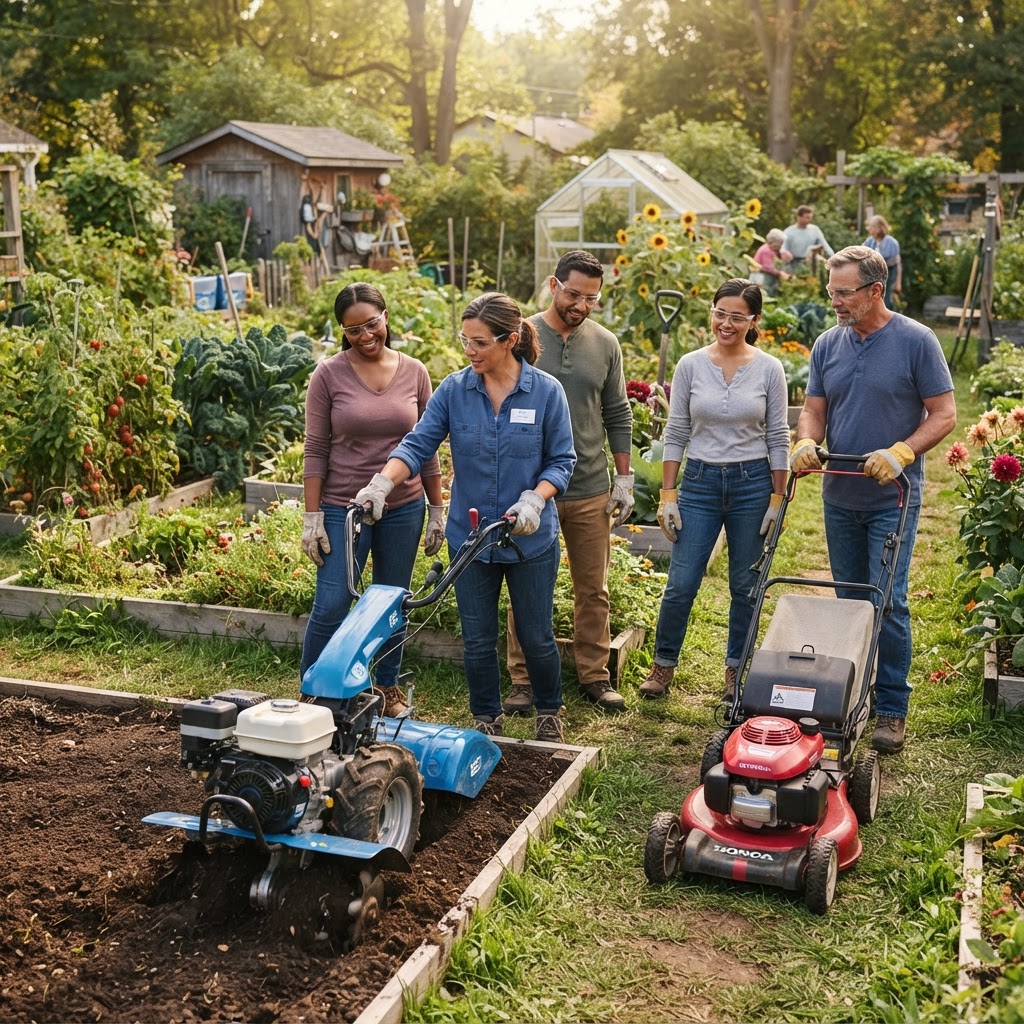
A power tiller (also called a rototiller or cultivator) uses rotating metal tines to break up and turn soil. They come in front-tine and rear-tine models, with rear-tine tillers being more powerful and better suited for breaking new ground. Front-tine models are typically lighter and easier to maneuver in established beds.
Key components you need to understand:
- Tines: The rotating blades that do the actual digging. They are extremely sharp and powerful.
- Depth stake/drag bar: Controls how deep the tines penetrate the soil.
- Throttle and clutch controls: Manage engine speed and tine engagement.
- Kill switch: The emergency shutoff — know exactly where this is before you start the machine.
Mowers
Community gardens commonly use walk-behind push mowers or self-propelled mowers for maintaining paths, borders, and common areas. Riding mowers may be present in larger garden sites.
Key components:
- Blade: A rapidly spinning metal blade beneath the deck — extremely dangerous if contacted.
- Blade engagement lever: Activates and deactivates the blade.
- Dead man's handle (operator presence control): A handle you must hold down to keep the blade running. Releasing it automatically stops the blade. Never tie or wedge this down.
- Discharge chute: Where clippings are ejected — always direct this away from people.
Essential Safety Gear and Preparation
Personal Protective Equipment (PPE)
Dressing appropriately is non-negotiable when operating power garden equipment. The right gear can mean the difference between a minor close call and a serious injury.
- Sturdy, closed-toe footwear: Steel-toed boots are ideal. Never operate a tiller or mower in sandals, flip-flops, or bare feet. Your feet are closest to the most dangerous moving parts.
- Eye protection: Safety glasses or goggles protect against flying debris, which can be projected with significant force, especially from mowers.
- Hearing protection: Prolonged exposure to engine noise can cause hearing damage. Foam earplugs or earmuffs are inexpensive and effective.
- Long trousers: These protect your legs from debris and minor cuts. Avoid loose-fitting clothing that could catch on moving parts.
- Gloves: Provide grip and protect your hands, particularly when handling equipment or clearing debris.
Pre-Operation Inspection Checklist
Before starting any session, run through this quick checklist:
- Check fuel and oil levels
- Inspect for fuel leaks or unusual odors
- Check that all guards and shields are in place
- Look for loose bolts, damaged parts, or worn belts
- Inspect tines or blades for damage or excessive wear
- Clear the work area of rocks, sticks, wire, and other debris
- Ensure the work area is free of bystanders, especially children
Operating a Power Tiller Safely
Before You Begin
Walk the area you intend to till and remove any rocks, roots, or debris that could become dangerous projectiles or damage the tines. Locate any underground utilities, irrigation lines, or buried obstacles. Flag these areas if necessary.
Check the tilling depth setting before starting. Starting too deep in compacted or rocky soil can cause the machine to lurch unpredictably.
During Operation
- Maintain a firm, two-handed grip on the handles at all times.
- Walk behind the machine — never stand beside it or lean over the tines.
- Keep bystanders at least 50 feet away while the tiller is running.
- Never reach down near the tines while the engine is running, even if the tines appear to have stopped. Disengage the clutch and turn off the engine before clearing any blockages.
- Work in straight passes when possible, overlapping slightly with each pass for even coverage.
- Be aware of slopes. Tillers can be difficult to control on inclines. Work across gentle slopes rather than up and down them, and avoid operating on steep grades.
- Reduce speed in unfamiliar terrain. If you hit resistance, don't force the machine. Stop, investigate the cause, and clear the obstruction safely.
After Use
Turn off the engine, wait for all moving parts to stop completely, and then clean soil from the tines. Store the machine in a secure, dry location with the fuel cap tightened.
Operating a Mower Safely
Before You Begin
Similar to the tiller, a thorough area walk is essential. Remove rocks, toys, garden tools, hose fittings, and any other objects from the mowing area. Even small stones can become dangerous projectiles when struck by a mower blade.
Check the mower deck and blade condition. A loose or cracked blade is a serious hazard and must be addressed before operation.
During Operation
- Never point the discharge chute toward people, animals, or structures. Set up your mowing pattern so debris is directed away from occupied areas.
- Keep children and pets well away from the mowing area. Establish a clear boundary and ask others to respect it.
- Never mow in reverse unless absolutely necessary, and always look behind you when doing so.
- Mow across slopes, not up and down them with a walk-behind mower, to reduce the risk of slipping and sliding under the deck.
- Stop the blade before crossing gravel paths, driveways, or non-grass areas. These surfaces can hide objects that the blade will fling.
- Never leave a running mower unattended. If you need to step away, disengage the blade and turn off the engine.
- Refuel only when the engine is off and cool. Gasoline spilled on a hot engine can ignite instantly.
After Use
Allow the engine to cool before storing. Clean underneath the deck to remove packed grass clippings, which can promote rust and affect blade performance.
Training and Building Competence
Formal Training Opportunities
Many cooperative extension offices, agricultural colleges, and community organizations offer equipment safety workshops. These are excellent resources, particularly for garden coordinators who will be training others.
Look for programs that include:
- Hands-on supervised practice
- Equipment-specific instruction
- First aid and emergency response components
Developing a Community Garden Training Protocol
If you coordinate or manage equipment for a community garden, establishing a clear training protocol protects both your volunteers and the equipment itself.
Consider implementing:
- A sign-off system where operators must demonstrate competency before using equipment independently
- A written equipment agreement that outlines safe use expectations
- Designated training sessions at the start of each growing season, especially for new members
- Clear posted instructions near stored equipment
- An incident reporting process so near-misses and accidents can be documented and learned from
Even informal buddy training — having an experienced member pair up with a new one for the first few sessions — dramatically improves safety outcomes.
Common Mistakes to Avoid
Understanding what can go wrong is just as important as knowing what to do right. These are the most common errors gardeners make with power equipment:
-
Skipping the pre-operation check. Equipment problems don't announce themselves — a two-minute inspection can catch a fuel leak, a loose blade bolt, or a damaged guard before it becomes an emergency.
-
Operating without PPE. It only takes one rock to cause a serious eye injury. Protective equipment feels inconvenient until the moment it saves you.
-
Tying down or bypassing the dead man's handle on mowers. This control exists specifically to stop the blade if you fall or lose control. Disabling it removes your most important safety failsafe.
-
Clearing blockages with the engine running. Even with the blade or tines disengaged, moving parts can re-engage unexpectedly. Always shut off the engine and wait for everything to stop before reaching near any moving components.
-
Letting inexperienced users operate equipment without supervision. Enthusiasm doesn't replace training. A well-meaning but untrained operator is a genuine safety risk.
-
Ignoring unusual sounds or performance changes. A new vibration, grinding noise, or change in handling is a sign something is wrong. Stop, investigate, and address the issue before continuing.
-
Operating when fatigued or distracted. These machines demand your full attention. If you're tired, rushed, or preoccupied, wait until you can give the task proper focus.
-
Fueling near ignition sources. Always refuel in a well-ventilated area, away from sparks, flames, or hot engine components.
Tips for Success
These practical tips will help you get the best results from your power equipment while keeping yourself and your community safe:
-
Till when soil moisture is right. Soil that is too wet clumps and damages structure; soil that is too dry is unnecessarily hard on the machine. Aim for moist but not muddy conditions.
-
Make multiple shallow passes rather than one deep one when breaking new ground. This is easier on the tiller and produces better results.
-
Mow when the grass is dry. Wet grass clumps, clogs the deck, and produces an uneven cut. Dry conditions make for more efficient mowing and easier cleanup.
-
Adjust cutting height for the season. Taller grass during hot weather helps retain soil moisture and reduces stress on turf.
-
Keep blades and tines sharp. Dull blades tear rather than cut, creating ragged edges that stress plants and increase engine load.
-
Establish a maintenance schedule and stick to it. Oil changes, air filter cleaning, blade sharpening, and belt inspections extend equipment life significantly.
-
Label fuel containers clearly and keep them in approved storage containers away from the equipment.
-
Know your limits. If a task feels beyond your skill level — a heavily overgrown area, very rocky soil, or a steep slope — ask for help or reassess the approach.
Conclusion
Power tillers and mowers are genuinely remarkable tools that make community gardening more productive and enjoyable. But they are machines with real hazards, and that demands real respect. The good news is that safe operation isn't complicated — it's a matter of preparation, attention, and a willingness to learn.
By investing time in proper training, wearing the right protective gear, performing regular equipment checks, and building a culture of safety in your community garden, you'll be well-equipped to use these tools confidently and responsibly. Every gardener who operates equipment safely helps create a garden environment that's welcoming and secure for everyone.
Take it one step at a time, ask questions freely, and remember that the goal is not just a well-maintained garden — it's a garden community where everyone goes home safe.