Getting Started
Before you plant a single shrub, it's worth taking time to assess your community garden's specific needs and conditions. A windbreak that works beautifully in the Pacific Northwest may be completely unsuitable for a garden in the central plains or the Southeast. Starting with the right information will save you time, money, and frustration.
Assess your site first. Walk the perimeter of your garden on a breezy day and note where the wind typically comes from. In most regions of North America, prevailing winds blow from the west or northwest, but local geography—hills, buildings, and bodies of water—can change wind patterns significantly.
Know your soil. Native shrubs are adapted to regional soils, but individual species still have preferences for drainage, pH, and fertility. Conduct a basic soil test before planting, especially if your garden is on land that was previously used for other purposes. Many cooperative extension offices offer affordable soil testing services.
Understand your hardiness zone. The USDA Plant Hardiness Zone Map is a reliable starting point for understanding which plants will survive your winters. However, also consider your region's summer heat, humidity, and drought tendencies when selecting species.
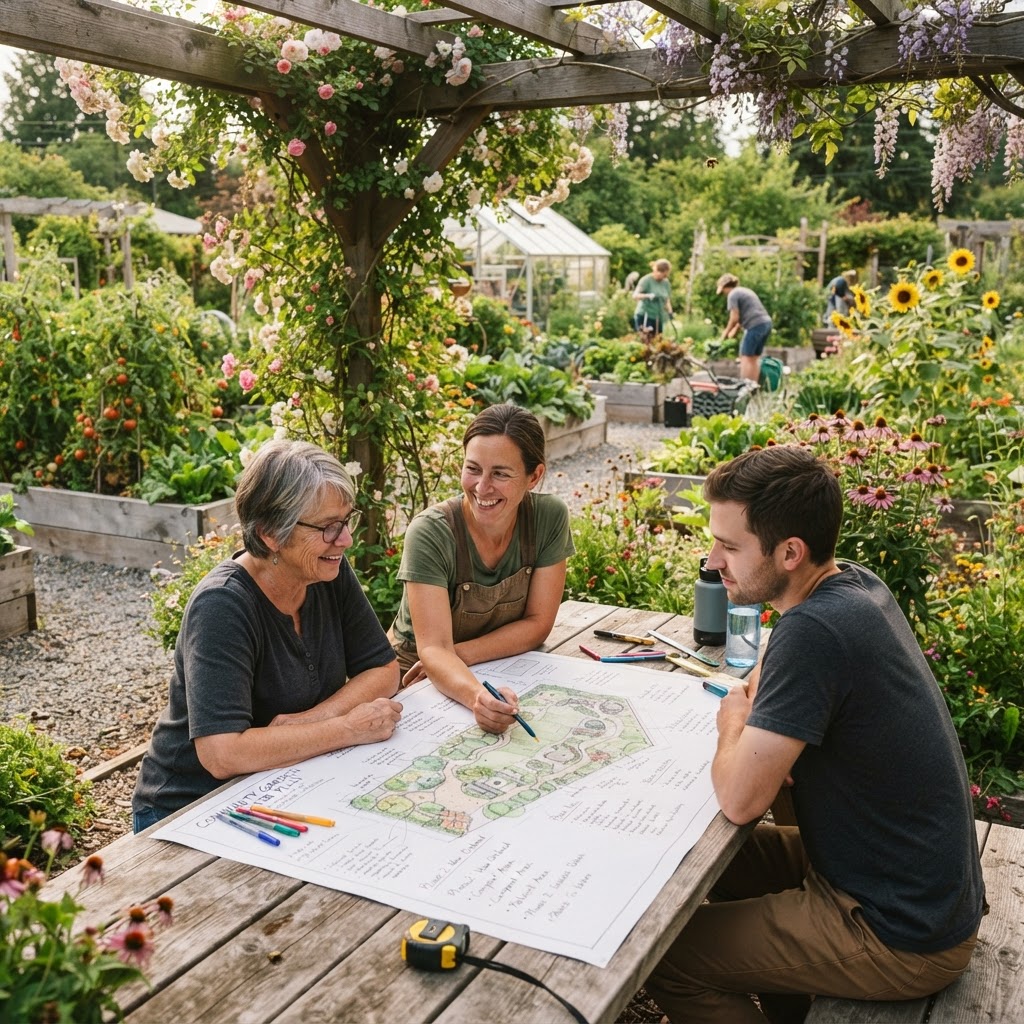
Check with your garden committee. Community gardens operate on shared land, and any major landscape addition—especially one that will cast shade or affect neighboring plots—should be discussed and approved by your garden's leadership and membership. Bring a proposal to your next meeting that includes plant species, dimensions, and expected benefits.
Identify your goals. Are you primarily trying to reduce wind damage to crops? Create privacy? Attract pollinators? Provide habitat for birds? Most native windbreaks can achieve several of these goals simultaneously, but knowing your priorities will help you choose the best plant combinations.
Why Native Shrubs Make the Best Windbreaks
Native shrubs have co-evolved with local insects, birds, and soils over thousands of years. This evolutionary relationship makes them uniquely valuable compared to ornamental or exotic windbreak plants.
Resilience without intervention. Once established—typically after two to three growing seasons—native shrubs rarely need supplemental watering, fertilizing, or pest control. They've developed natural defenses against local pests and diseases, and their root systems are built for local conditions.
Ecological generosity. Native shrubs provide food and habitat for native bees, butterflies, moths, birds, and small mammals. A windbreak made of elderberry, buttonbush, or native viburnums is not just a barrier—it's a living ecosystem that actively enriches your garden's surrounding environment.
Seasonal interest. Most native shrubs offer multiple seasons of visual and ecological interest: spring flowers for early pollinators, summer foliage for shade and shelter, fall berries for migrating birds, and winter structure and seed heads for overwintering wildlife.
Long-term cost savings. The initial investment in native shrubs pays off quickly through reduced maintenance costs. Communities that have replaced exotic windbreaks with native ones often report significantly lower water bills and nearly no need for chemical inputs after establishment.
Top Native Shrubs for Windbreaks by Region
Eastern and Southeastern United States
Inkberry (Ilex glabra) is a dense, evergreen holly native to the eastern seaboard. It grows six to eight feet tall, tolerates wet soils, and provides exceptional wind resistance due to its compact branching. The small black berries are beloved by birds in winter.
Buttonbush (Cephalanthus occidentalis) thrives in moist to wet conditions, making it ideal for gardens near drainage areas. Its unusual spherical white flowers are magnets for butterflies and native bees in midsummer. Growing up to twelve feet in ideal conditions, it creates a substantial barrier.
Arrowwood Viburnum (Viburnum dentatum) is one of the most versatile native shrubs for eastern windbreaks. It tolerates a wide range of soil conditions, handles both sun and partial shade, and produces clusters of white flowers followed by blue-black berries. Native bees are especially attracted to its flowers in late spring.
American Beautyberry (Callicarpa americana) is a showstopper in fall when its bright magenta berry clusters ripen. It grows vigorously in the Southeast, tolerates heat and humidity, and provides good seasonal wind reduction. It's semi-deciduous in northern parts of its range.
Midwest and Great Plains
Native Plum (Prunus americana) forms thicket-like colonies that are outstanding for windbreaks on open, exposed sites. The dense branching offers year-round wind protection, and the early spring blossoms are a critical resource for early-emerging native bees. The tart fruits attract birds and can even be harvested for jam.
Prairie Ninebark (Physocarpus opulifolius) is an incredibly tough native shrub that thrives in the challenging conditions of the Midwest. It handles everything from drought to occasional flooding, features attractive exfoliating bark, and produces white flower clusters that attract a variety of native bees.
Wolfberry (Symphoricarpos orbiculatus) also known as Coralberry, forms dense thickets and spreads by suckers, which is excellent news for windbreaks that need to fill in over time. Its tolerance for poor soils and full sun makes it a reliable choice for exposed community garden edges.
Western United States
Toyon (Heteromeles arbutifolia) is a California native sometimes called "California Holly." It can reach fifteen feet or more and provides year-round evergreen coverage with spectacular red winter berries. It's drought-tolerant once established and highly fire-resistant, which is an important consideration in western regions.
Serviceberry (Amelanchier alnifolia) is native across the western mountains and valleys. It produces beautiful white flowers in early spring, followed by sweet edible berries in summer. It grows six to fifteen feet depending on the variety and handles dry conditions well once established.
Ocean Spray (Holodiscus discolor) is a Pacific Northwest native that produces cascading clusters of creamy white flowers in summer. Growing up to fifteen feet in ideal conditions, it creates an impressive windbreak and supports many native bee species.
Pacific Northwest
Red Elderberry (Sambucus racemosa) grows rapidly in the moist Pacific Northwest climate, sometimes adding several feet of growth per year. It can reach ten to fifteen feet, provides dense foliage for wind protection, and produces berries that birds consume eagerly. Note that the berries are not edible for humans when raw.
Nootka Rose (Rosa nutkana) forms dense, thorny thickets that create an impenetrable windbreak while also providing beautiful pink flowers for pollinators and large rose hips for birds in winter.
Planting Layout and Design Tips
The effectiveness of a windbreak depends as much on its design as on plant selection. A well-designed native shrub windbreak should slow and redirect wind, not block it entirely—research shows that barriers that are approximately fifty percent permeable are more effective than solid barriers, which can create turbulence.
Plant in staggered rows. A single row of shrubs provides some protection, but two or three staggered rows dramatically increase effectiveness. Plant rows offset from each other so there are no direct gaps through which wind can channel.
Consider mature size. Give shrubs adequate room to reach their mature spread without crowding. Check the mature width of your selected species and space accordingly—typically five to ten feet between plants depending on species.
Orient your windbreak perpendicular to prevailing winds. Your windbreak should run roughly at a right angle to the direction wind most commonly comes from. A windbreak that's parallel to the wind provides almost no benefit.
Mix heights for better protection. Combining taller shrubs in the middle row with medium-height shrubs on the outer rows creates a layered profile that captures more wind energy across different heights. This also creates more varied habitat for wildlife.
Leave transition zones. At the ends of your windbreak, leave gradual transitions rather than abrupt ends. Abrupt edges can create wind eddies that actually increase turbulence on the downwind side.
Supporting Wildlife and Pollinators
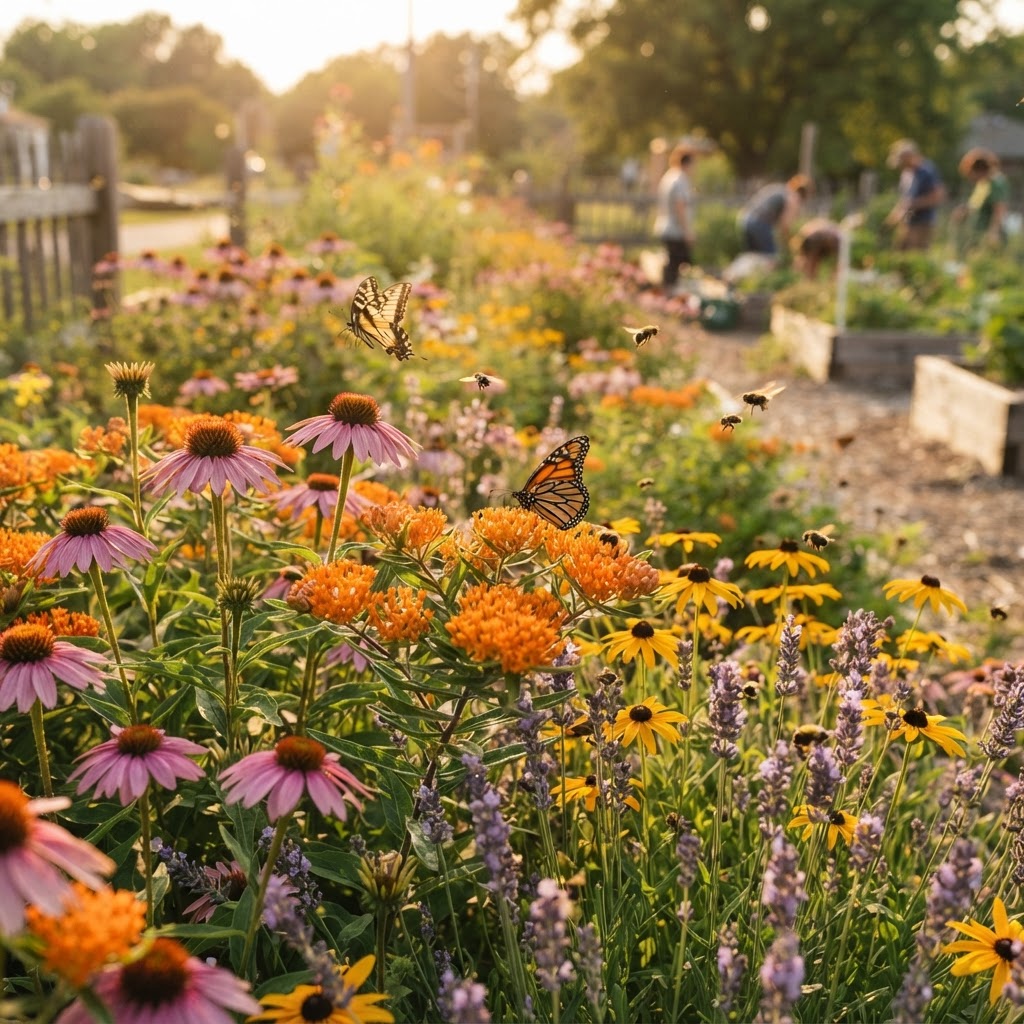
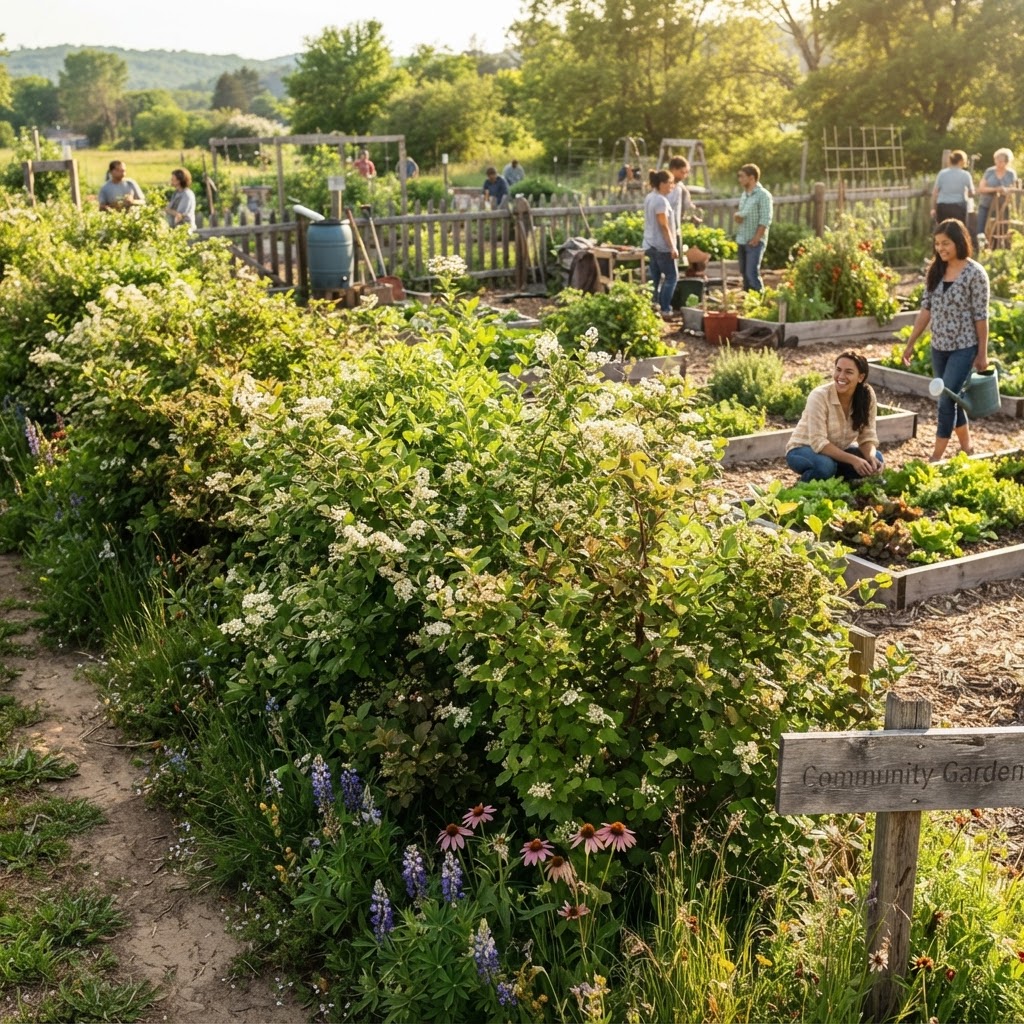
One of the greatest advantages of choosing native shrubs for your windbreak is the habitat value they provide. A diverse planting of native shrubs can transform the edges of your community garden into a thriving wildlife corridor.
Select plants that bloom in sequence from early spring through fall to provide continuous nectar and pollen for native bees. Pair early bloomers like Native Plum with summer bloomers like Buttonbush and fall-fruiting species like Arrowwood Viburnum.
Include plants with hollow or pithy stems—such as elderberry—that provide nesting habitat for cavity-nesting native bees. Leave some dead stems standing through winter rather than cutting everything back in fall.
Berry-producing shrubs in your windbreak will attract migrating birds in fall, which can also have a pest-control benefit for your garden, as many songbirds are voracious insect eaters.
Avoid mulching right up to the base of shrubs if you want to support ground-nesting native bees, which make up the majority of native bee species in North America. Leave some patches of bare, undisturbed soil near the windbreak.
Maintenance and Care Through the Seasons
Spring: Inspect shrubs for winter damage and remove any dead or broken branches. This is also the ideal time to add a light layer of compost around the base of newly established plants. Hold off on heavy pruning until after flowering to avoid removing flower buds and the wildlife resources they provide.
Summer: Water newly planted shrubs during dry spells in their first two growing seasons. Once established, most native shrubs handle summer drought without assistance. Watch for any signs of unusual pest pressure and consult with your local cooperative extension office before intervening.
Fall: This is a good time to plant new shrubs, as cooler temperatures and fall rains help with establishment. Resist the urge to tidy up completely—leave seed heads, berry clusters, and leaf litter in place, as they provide critical food and shelter for wildlife through winter.
Winter: Assess the windbreak's performance during windy weather. Note any gaps or areas where wind is still causing problems and plan additional planting for spring. Winter is also an excellent time to divide and transplant any spreading species like Coralberry.
Common Mistakes to Avoid
Planting too close to vegetable plots. Even native shrubs cast shade, and shrubs can grow surprisingly large. Plant your windbreak far enough from your most sun-loving crops to avoid shading them as the shrubs mature. A general rule is to plant your windbreak at a distance of at least twice the expected mature height of the shrubs.
Choosing only one or two species. Monoculture windbreaks are vulnerable to species-specific pests and diseases. A diverse mix of at least four or five different native species creates redundancy and richer habitat value.
Neglecting the establishment period. Native plants are often marketed as "plant it and forget it," but this applies only after they're established. During the first two years, consistent watering during dry periods is critical to survival.
Pruning at the wrong time. Heavy pruning in early spring removes flower buds and the nesting sites that birds may have established over winter. If pruning is necessary, do major work in late summer after breeding season or in late winter just before new growth begins.
Planting invasive lookalikes. Some non-native species resemble native shrubs but are actually invasive. Common privet, autumn olive, and multiflora rose are frequently mistaken for acceptable windbreak plants. Always purchase plants from a reputable native plant nursery and verify the scientific name of anything you're considering.
Forgetting about irrigation during establishment. Installing a temporary drip irrigation system or assigning watering responsibility during the first two summers dramatically improves establishment success rates.
Tips for Success
- Source locally whenever possible. Plants grown from locally collected seed are often better adapted to your specific region's conditions than plants grown from seed sources in different parts of a species' range.
- Group plant care responsibilities. Assign windbreak maintenance to a dedicated garden team or rotating volunteer group to ensure consistent care during the critical establishment period.
- Start with smaller plants. Gallon-sized shrubs often catch up to and outperform three or five-gallon container plants within a few seasons, and they're significantly more affordable.
- Mulch generously at planting time. Apply three to four inches of wood chip mulch around newly planted shrubs, keeping it a few inches away from the stem. This retains moisture, moderates soil temperature, and suppresses competing weeds.
- Document your planting. Create a simple map of what was planted where, including the date, species, and source. This is invaluable for future volunteer gardeners and helps track performance over time.
- Connect with your local native plant society. These organizations are treasure troves of region-specific advice, plant sales, and volunteer expertise. Many offer free consultations for community projects.
Conclusion
A native shrub windbreak is one of the most enduring and ecologically valuable investments a community garden can make. By choosing plants that are native to your region, you're not only creating effective protection for your growing plots—you're also building habitat, supporting pollinators, attracting wildlife, and reducing long-term maintenance costs for your entire garden community.
The process takes patience. Native shrubs won't create an effective windbreak overnight, and the first couple of seasons are the most demanding in terms of care. But by the third or fourth year, you'll have a living, thriving barrier that improves every season and gives back far more than it demands.
Start with a thoughtful site assessment, choose the right species for your region and conditions, design your planting with wind patterns and wildlife in mind, and give your new shrubs the care they need to get established. The result will be a community garden that's more productive, more beautiful, and more ecologically connected than ever before.