Getting Started
Before diving into the application process, take a breath. CDBG applications can seem intimidating at first glance, but thousands of community organizations — including garden projects just like yours — successfully secure this funding every year. The key is understanding the program, doing your homework, and approaching the process with patience and preparation.
Here's what you'll need to do before anything else:
Confirm your project is a good fit. Not every community garden project will qualify for CDBG funding. The program is federally administered through the U.S. Department of Housing and Urban Development (HUD) but distributed at the local level through municipalities and counties. Projects need to meet specific federal objectives, which we'll cover below.
Find your local CDBG administrator. Your city, county, or town government manages CDBG funds locally. Start by contacting your municipal government's community development office, planning department, or housing department. Many municipalities post their CDBG application materials online each year, so a quick search for "[your city] CDBG application" is a great starting point.
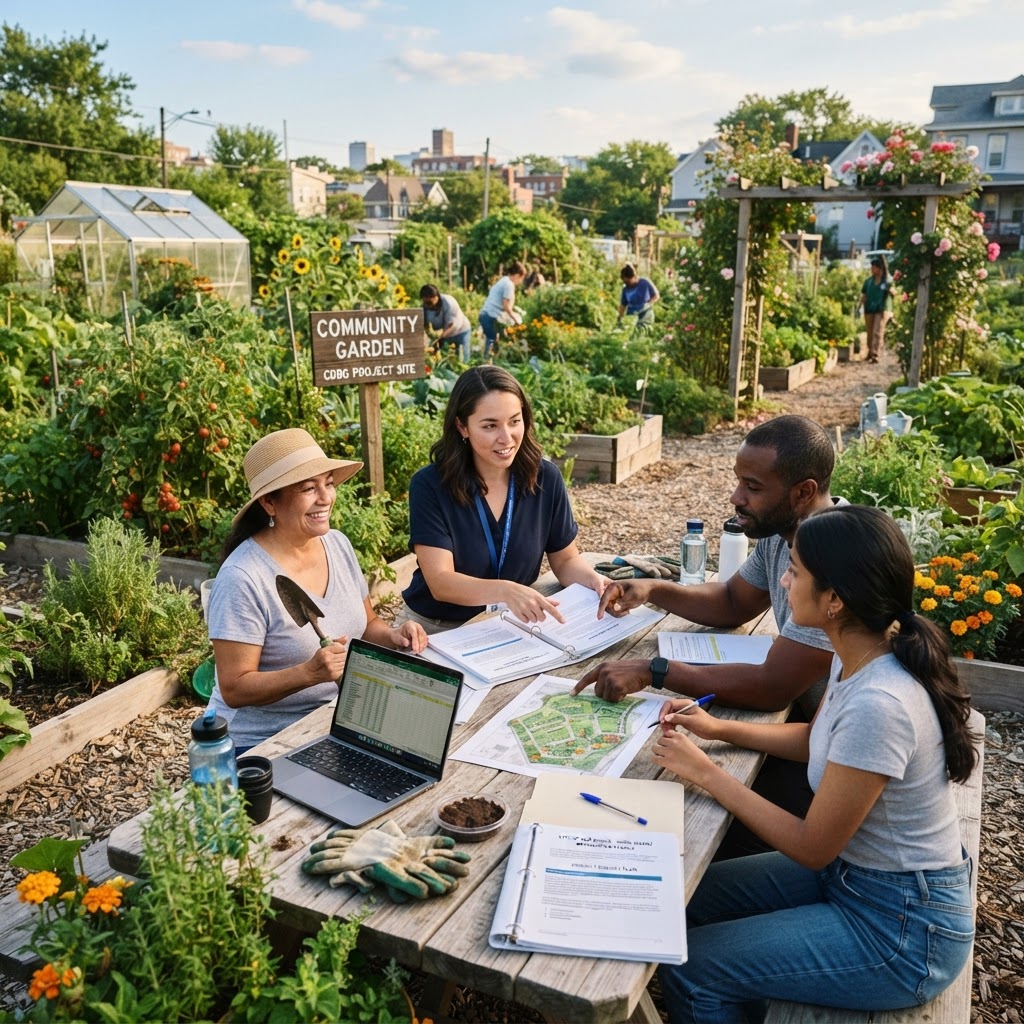
Attend an informational meeting. Many municipalities host workshops or informational sessions for prospective CDBG applicants. These are incredibly valuable — local program staff can tell you exactly what your municipality is prioritizing that funding cycle and what they want to see in applications.
Get organized early. CDBG application cycles often run annually, and deadlines can be strict. Give yourself at least three to four months to prepare a competitive application.
What Are Community Development Block Grants?
The Community Development Block Grant program is a federal program that provides annual funding to states, cities, and counties to address community development needs. The program has been around since 1974 and is one of the longest-running federal grant programs in existence.
At its core, CDBG funding is meant to support the development of viable urban communities by providing decent housing, a suitable living environment, and expanded economic opportunities — primarily for low-to-moderate income individuals and families.
Larger cities and urban counties receive CDBG funds directly from HUD and are called "entitlement communities." Smaller cities and rural areas receive funding through their state government. This distinction matters because the application process and priorities may differ depending on whether you're applying through a city entitlement program or a state-administered program.
The CDBG program gives local governments significant flexibility in how they allocate funds, which means what's funded in one city might differ from what's funded in a neighboring town. That's why understanding your local municipality's priorities is absolutely essential.
Who Qualifies for CDBG Funding?
To receive CDBG funding, your project must meet at least one of three national objectives:
-
Benefit low-to-moderate income persons. This is the most common objective used by community garden projects. At least 51% of the people your project benefits must be low-to-moderate income individuals, as defined by HUD income limits for your area.
-
Aid in the prevention or elimination of slums or blight. If your garden project is transforming a vacant, blighted property into a community asset, it may qualify under this objective.
-
Meet an urgent community development need. This category is typically reserved for disaster or emergency situations and is less commonly applicable to garden projects.
Most community gardens qualify under the first objective. If your garden is located in a low-to-moderate income census tract, or if you can document that the majority of your garden members or program participants are low-to-moderate income, you're likely in good shape.
Eligible applicants typically include:
- Nonprofit organizations with 501(c)(3) status
- Local government agencies
- In some municipalities, neighborhood associations or informal groups applying in partnership with a nonprofit fiscal sponsor
If your garden group is not incorporated as a nonprofit, partnering with an established nonprofit organization as a fiscal sponsor is a common and effective approach. Many community foundations and local nonprofits offer fiscal sponsorship services.
How CDBG Funding Can Support Your Community Garden
One of the great strengths of CDBG funding is its flexibility. Depending on your municipality's priorities and program guidelines, CDBG funds can potentially support a wide range of community garden needs, including:
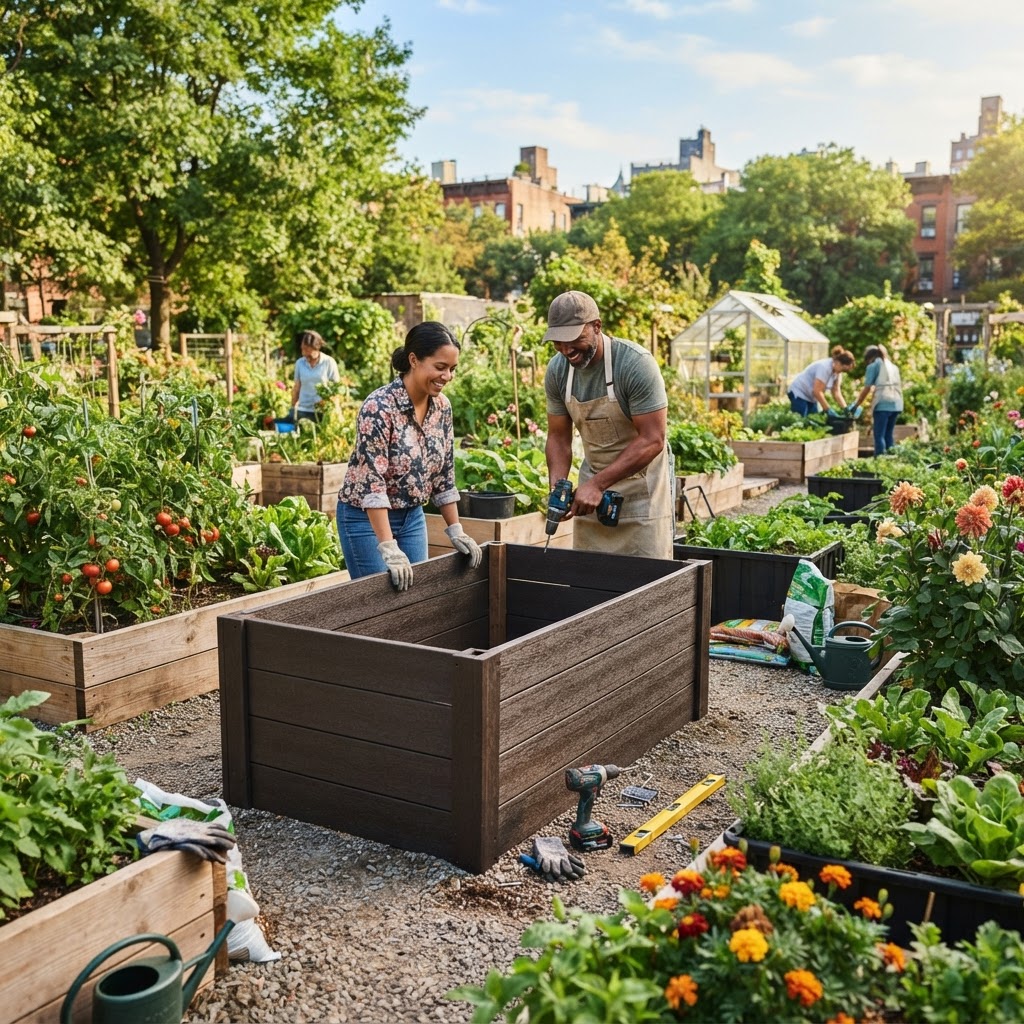
- Land improvements and infrastructure — grading, soil remediation, raised bed construction, irrigation systems, fencing, and pathways
- Accessibility improvements — ADA-compliant pathways, accessible raised beds, and seating areas
- Facility construction — tool sheds, composting areas, water collection systems, and community gathering spaces
- Program costs — in some cases, staffing for garden education programs serving eligible populations
- Planning and design — hiring landscape designers or urban agriculture consultants to create a master plan for your garden space
It's important to note that CDBG funds generally cannot be used for ongoing operating expenses like utility bills or general maintenance. The program tends to favor capital improvements and direct service programs with measurable community impact.
The Application Process Step by Step
Step 1: Research Your Local Program
Contact your municipal community development office and request information about the CDBG application process, timeline, and current funding priorities. Ask specifically whether community garden or urban agriculture projects have been funded previously, and if possible, request copies of successful past applications.
Step 2: Establish Your Eligibility
Work with local staff to confirm your project meets a national objective. If you're claiming the low-to-moderate income benefit objective, gather data to support this claim. Census data, neighborhood income surveys, and participant intake forms can all serve as documentation.
Step 3: Define Your Project Clearly
Before you write a single word of your application, define your project in clear, specific terms. What exactly will be built or accomplished? What is the timeline? Who will be served, and how many people? What measurable outcomes will result?
Step 4: Develop a Detailed Budget
Work with your project partners, contractors, or vendors to develop a realistic, itemized budget. CDBG programs scrutinize budgets closely. Every line item should be justified and documented with quotes or estimates where possible.
Step 5: Write Your Application
Follow the application instructions precisely. Most applications will ask for a project narrative, goals and objectives, a timeline, a budget, and supporting documentation. Address every question fully and avoid leaving sections blank.
Step 6: Gather Supporting Documents
Common supporting documents include:
- Proof of nonprofit status or fiscal sponsor agreement
- Letters of support from community members, partner organizations, or local officials
- Site control documentation (lease agreement, land use agreement, or deed)
- Photos of the current site
- Organizational financial statements
Step 7: Submit and Follow Up
Submit your application before the deadline — late applications are almost always disqualified. After submission, follow up politely with program staff to confirm receipt and ask about the review timeline.
Building a Strong Application
The narrative section of your application is where you make your case. Here are the elements of a compelling application narrative:
Tell your community's story. Help reviewers understand the need your garden addresses. What are the food access challenges in your neighborhood? What community development goals does your project support? Use specific, local context rather than generic statements.
Be specific about your outcomes. Vague promises don't win grants. Instead of saying "we will help the community," say "we will provide fresh produce growing plots to 45 low-income households and conduct 12 nutrition education workshops serving an estimated 150 participants annually."
Demonstrate organizational capacity. Show that your organization or team has the skills, experience, and partnerships to successfully complete the project. Highlight relevant past projects, key team members, and community partnerships.
Show community support. Letters of support from community members, neighborhood associations, local schools, or health organizations demonstrate that your project has genuine community backing.
Connect to local priorities. Review your municipality's Consolidated Plan, which outlines their community development priorities for the CDBG program period. Explicitly connect your project to these stated priorities in your narrative.
Common Mistakes to Avoid
Even strong projects can be undermined by avoidable application errors. Watch out for these common pitfalls:
Applying without confirming eligibility first. Never invest significant time in an application without first confirming with program staff that your project is an eligible use of funds in your municipality.
Vague or unmeasurable project goals. Applications that lack specific, measurable outcomes are frequently scored lower or rejected. Always quantify what you plan to accomplish.
Underestimating the budget. Submitting a budget that's unrealistically low can raise red flags. Get real quotes and estimates, and include a reasonable contingency.
Ignoring the instructions. If the application asks for a two-page narrative, submit a two-page narrative — not one page and not five. Following instructions carefully signals that your organization can follow program requirements.
Missing documentation. Incomplete applications are a common reason for rejection. Create a checklist of all required attachments and verify each one before submitting.
Waiting until the last minute. CDBG applications require gathering information from multiple sources. Starting too late leaves you scrambling and increases the chance of errors.
Failing to demonstrate site control. If you don't own or have a documented right to use the land where your garden will be located, funders have no assurance the project will actually happen. Secure a lease or land use agreement before applying.
Not asking for help. Local program staff are there to help applicants understand the process. Don't be afraid to ask questions — it's expected and encouraged.
Tips for Success
-
Build relationships before you apply. Attend public meetings about your municipality's Consolidated Plan, introduce yourself to program staff, and get to know other community organizations that have received CDBG funding. These relationships pay dividends at application time.
-
Start with a smaller, focused project. If this is your first CDBG application, consider proposing a well-defined, achievable project rather than a complex, multi-phase initiative. Demonstrating that you can successfully manage funds opens doors for future, larger grants.
-
Partner strategically. Partnering with established nonprofits, local health organizations, or schools strengthens your application and expands your project's reach.
-
Document everything. Keep records of community meetings, volunteer hours, participant sign-in sheets, and project photos. This documentation supports future grant applications and demonstrates accountability.
-
Apply in multiple cycles. Many successful grantees apply more than once before receiving funding. If you're not funded in one cycle, ask for feedback and improve your application for the next round.
-
Think about sustainability. Funders want to know that projects won't collapse once grant funding ends. Include a plan for how your garden will sustain itself financially over the long term.
Conclusion
Applying for Community Development Block Grant funding is one of the most impactful steps a community garden can take toward building lasting infrastructure and expanding its reach. While the process requires time, attention to detail, and community engagement, the potential reward — substantial, flexible funding to transform your garden into a true community asset — is well worth the investment.
Remember that every successful CDBG-funded community garden project started exactly where you are now: with a vision, a community need, and a willingness to do the work. By understanding the program, connecting with your local administrators, crafting a specific and compelling application, and learning from each experience, you can secure the funding your community garden deserves.
The food you grow, the neighbors you bring together, and the green space you create all matter. CDBG funding exists precisely to support projects like yours. Take the first step today.